Field file · Lake & sea monster · Folklore
Each-uisge
Also known as Water Horse of the Highlands, Aughisky (Ireland), Cabyll-ushtey (Isle of Man)
The Highland ‘water horse’, a shapeshifter said to lure riders to the loch, drown them and leave only the liver – the deadliest cousin of the kelpie.
The each-uisge (Gaelic for “water horse”) is a shapeshifting water spirit of Highland and Hebridean folklore. It takes the form of a fine horse or pony, or sometimes a handsome man, and waits at the edge of a loch for someone to climb on its back. The folklorist Katharine Briggs called it perhaps the fiercest of all the water-horses.
Unlike the kelpie, usually linked with rivers and streams, the each-uisge is a creature of the sea, sea lochs and deep freshwater lochs. According to the tales, a rider is safe only while the horse stays on land; once it smells water, its skin sticks fast, and it plunges into the deepest part of the loch, drowns the rider and devours the body. Only the liver is left, floating on the surface.
The stories give ways to escape or beat it. A man might cut off a finger that stuck to its hide, as in a tale from John Gregorson Campbell’s Superstitions of the Highlands and Islands of Scotland (1900), or loaded his gun with a silver coin. On Raasay a smith whose daughter had been taken built a forge by the loch and lured the beast out with roasted meat, then killed it with red-hot hooks, leaving only a jelly-like mass by morning. A hill on Lewis, Cnoc-na-Bèist, is said to mark where a brother killed an each-uisge that had been courting his sister.
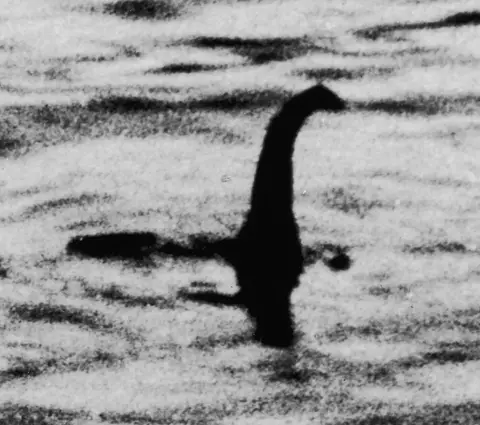
Irish tradition calls the creature the aughisky, which can be tamed as a superb steed if it never sees the sea, and the Isle of Man has the cabbyl-ushtey. Some writers have noticed similarities between old water-horse tales and modern reports of lake monsters in Scotland, though the link is a matter of interpretation, not evidence.
What does Each-uisge look like?
A handsome horse or pony, often grey or dark, with water weeds or sand and mud in its mane; in human form a good-looking man with wet hair; also reported as a huge bird (the boobrie).
Where is Each-uisge seen?
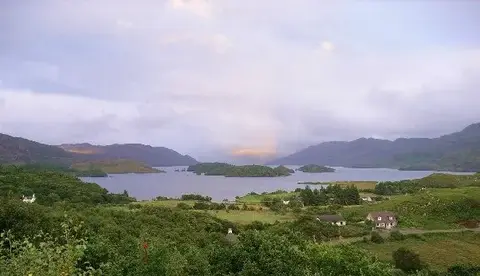
Deep sea lochs and freshwater lochs, especially lonely, treeless shores in the Highlands, Skye, Raasay, Mull and Lewis.
Each-uisge sightings
- 1893Mackinlay’s Lochs and Springs Scotland
James Mackinlay’s Folklore of Scottish Lochs and Springs collected water-horse beliefs and suggested that waves and animals seen from a distance explain many of the stories.
- 1900Campbell’s Superstitions Highlands and Islands
John Gregorson Campbell recorded tales of riders escaping the creature, including the story of the Heir of Aros on Mull.
- 1976Briggs’s Encyclopedia Britain
Katharine Briggs’s encyclopedia of fairies summed up the each-uisge as the fiercest water-horse and helped fix its modern picture.
Is Each-uisge real? What could explain it
- Water-horse stories work as cautionary tales warning children and travellers away from deep, cold, dangerous lochs.
- Mackinlay suggested that wind-less waves, rocks and ordinary animals seen across the water could be mistaken for a spirit in lonely places.
- Folklorists see a link with the Germanic nix and other European water-demons, and some scholars debate whether the medieval Norse ‘maned’ beast-man in Ireland describes the same idea.
Legend, culture and tourism
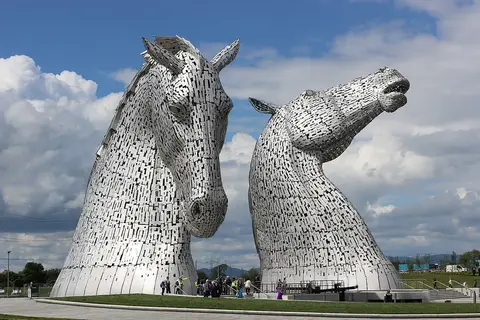
The each-uisge survives in Gaelic story, in Highland tourism and in the modern image of the Loch Ness water-horse. Its more famous cousin, the kelpie, is carved in stone in the Kelpies sculptures near Falkirk.
Where it’s reported
Sources
First published · Updated