Field file · Reptilian · Folklore
Bakunawa
Also known as Bakonawa, Laho (Tagalog), Moon-eating dragon
The great serpent of Visayan and Bicol myth that swallows the moon to cause eclipses, answered by banging pots and drums until it lets go.
In the Visayas and Bicol the Bakunawa is a giant, sea-dwelling serpent or dragon blamed for eclipses, and sometimes for earthquakes, storms and wind. Its name probably combines old Philippine roots meaning ‘bent’ and ‘snake’. In the best-known tale, written down in Cebuano by Fernando Buyser in 1913, the god Bathala created seven moons; the Bakunawa rose from the sea and swallowed six of them, and the seventh was saved when Bathala planted bamboo on it, whose dark patches are said to be the bamboo.
The eclipse custom is the oldest documented part. The Spanish friar Tomás Ortiz wrote in 1731 that people went out during lunar eclipses with bells and instruments to protect the moon from a dragon, tiger or crocodile, and noted that Tagalogs said Laho had swallowed the moon – a name derived from the Indian eclipse-demon Rahu, a sign of Hindu–Buddhist influence. Related beings include the Kapampangan Láwû and the Bagobo Minokawa.
Retellings differ. One version has the Bakunawa mourning its sister, a sea turtle killed by humans; another gives it a human lover. A babaylan, the traditional priestess, is said to have tracked the serpent’s movements as a calendar to guide house building and planting, although such details come mostly from popular sources. Bakunawa heads decorate the hilts of old Panay swords and ships. Children play ‘Bakunawa’, a ring game in which one child, the moon, is protected from another.
Scholars caution that the popular Bakunawa story owes much to Buyser’s 1913 text, whose footnotes compare the creature to the serpent in the Book of Revelation, and to later editions that removed those references. The serpent now appears in fantasy games, music and an opera performed in Maasin, Leyte, in 1974.
What does Bakunawa look like?
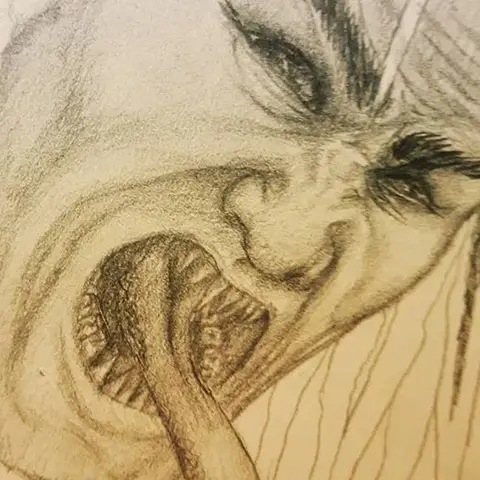
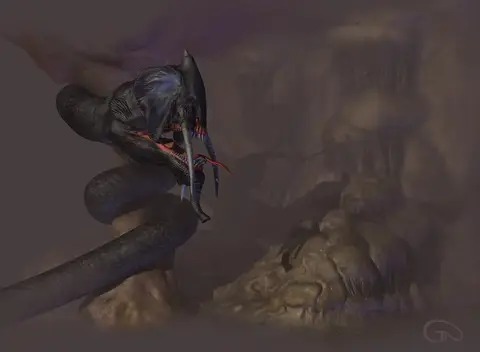
Described as a huge snake-like dragon with a looped tail, a horn, whiskers and gills; some Panay tellings give it wings and a shark-like mouth.
Where is Bakunawa seen?
Said to live in the sea or underworld, rising to the sky during lunar eclipses.
Bakunawa sightings
- 1731Ortiz records the eclipse custom Philippines
Fr. Tomás Ortiz wrote that people rang bells and beat instruments during lunar eclipses to protect the moon from a dragon, while Tagalogs spoke of Laho.
- 1913Buyser’s ‘Bakunawa and the Seven Moons’ Panay
Fernando Buyser published the tale of the seven moons in Cebuano, the root of most modern retellings.
- August 9, 1974The Legend of Bakunawa opera Maasin, Southern Leyte
Noni Espina’s opera premiered, making the myth a stage work.
Is Bakunawa real? What could explain it
- The myth is an explanation of eclipses, which are astronomical events; the noise-making custom reflects a worldwide practice of ‘helping the moon’.
- Hindu–Buddhist trade contacts brought Rahu and Naga themes, which merged with local sea-serpent imagery.
- Much of the tale’s best-known form comes from a 1913 written version, so older oral variants are partly speculative.
Legend, culture and tourism
The Bakunawa motif is found on sword hilts and in children’s games and modern media; the dragon is a symbol of Visayan identity.
Places to visit
Regional museum with collections on Western Visayan culture and history.
Where it’s reported
Sources
First published · Updated