Field file · Reptilian · Folklore
Imugi
Also known as Imoogi, Iseongi, Gangcheori, Kkwangcheori
Korea’s great water-serpent, a dragon in the making that needs a thousand years – and no interference – before it rises to the sky.
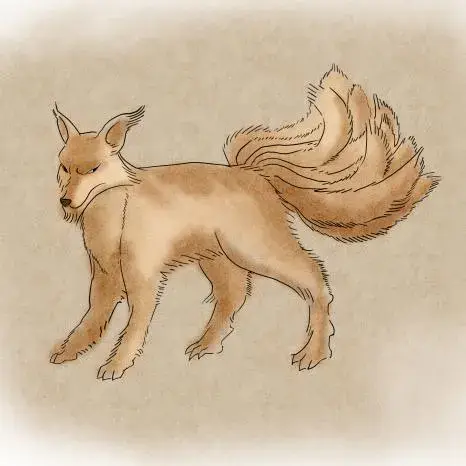
The imugi (이무기) is a huge serpent of Korean folklore, understood as a dragon that has not yet finished becoming one. It lives in deep, still water or caves and is imagined as a giant version of the common field snake. Folk accounts say that after about a thousand years, or by seizing a wish-fulfilling jewel (yeouiju), it ascends as a true dragon (yong) bringing clouds and heavy rain. Names recorded in the 1527 character primer Hunmong Jahoe include mireu, and others include isimi and kkwangcheori.
Stories stress that the ascent depends on humans. Interfering with an imugi, or revealing its secret, can stop the rise and invite revenge. In one tale an old man turning into an imugi in a village well was three days short of rising when his wife revealed him; he died in the well.
The imugi’s best-known literary form is in the Samguk Yusa, compiled by the monk Iryeon around 1281. In the story of Boyang, a dragon’s son named Imok lives in a pond near a temple and, during a drought, brings rain without leave of the Heavenly Emperor, who sends an envoy to kill him; Boyang hides him and points the envoy to a pear tree of the same sound, which is struck by lightning. Another being, the gangcheori, appears in 17th-century Korean writings, including Jibong Yuseol (1614), as a venomous dragon-like creature whose heat brings drought.
The imugi is a living motif rather than a documented animal; it appears in Korean film and television, including the 2007 film D-War.
What does Imugi look like?
A large, python-like serpent that may have little legs or none and no horns; some versions list stages from tadpole-like creature to coiled dragon.
Where is Imugi seen?
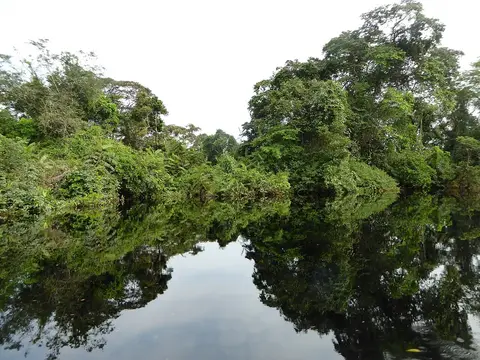
Deep ponds, rivers, lakes and mountain caves, where it waits for centuries.
Imugi sightings
- About 1281The Imok story in Samguk Yusa Silla, Korea
The monk Iryeon’s collection told of a dragon’s son in a pond who brings rain and is saved from punishment.
- 1527Hunmong Jahoe Korea
The character primer glossed the dragon character with the native word mireu.
- 1614Jibong Yuseol Korea
Records the gangcheori, a dragon-like creature whose passing is said to feel like spring.
Is Imugi real? What could explain it
- Large snakes, eels and fish seen in deep pools were framed as dragons waiting to rise.
- The idea explains why some water spirits do not appear as dragons.
- The tales teach restraint and respect for secrets, and provide a rain-making rationale.
Legend, culture and tourism
A theme in Korean folk art and temples; dragon imagery is widespread in Buddhism and royal robes.
Places to visit
UNESCO-listed Silla sites rich in dragon imagery.
Where it’s reported
Sources
First published · Updated