Field file · Other · Folklore
Aitvaras
Also known as Pūkis, Pūķis (Latvia), Kaukas (related), Household dragon
The aitvaras of Lithuania and Latvia: a fire-tailed rooster or dragon, hatched from an old cock’s egg, that brings its keeper stolen grain and gold.
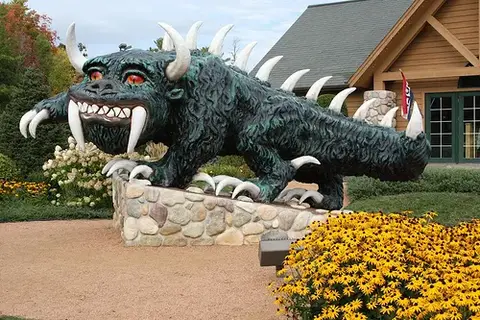
The aitvaras is a household spirit of Lithuanian folklore, called the pūķis in Latvia. Indoors it appears as a black or white rooster, a black cockerel or a cat; outdoors it is seen as a fiery serpent or dragon with a tail like a meteor streaking across the sky. When it dies, tradition says, it becomes a spark.
According to the main legend, it hatches from the egg of an unusually old rooster, said to be nine to fifteen years old, kept warm under a person’s arm. Once it lodges in a house it rarely leaves, and the household must feed it, with eggs, omelettes or the first mouthful of each dish, in exchange for its service.
The aitvaras brings wealth, grain, flax, milk, gold and money, but the gifts are said to be stolen from neighbours or wealthy landowners, and a spirit that is neglected or insulted may steal from its own keeper or set the house on fire. In Latvia the pūķis likewise hoards grain, and early modern sources note that alleged contact with such dragons provoked a number of witch trials. Later Christian tradition portrayed the aitvaras as demonic, with gifts won by theft or temptation.
The commonest explanation of the fiery dragons is meteors observed in the night sky. Similar fire-borne treasure-bringers are known in neighbouring Estonia (the kratt) and Hungary (the lidérc).
What does Aitvaras look like?
A rooster or cat in the house; a fiery, dragon-like streak with a blazing tail in the night sky.
Where is Aitvaras seen?
Farm houses, barns and granaries; seen as a light flying toward a keeper’s home at night.
Is Aitvaras real? What could explain it
- Fireballs and meteors crossing the night sky are the likeliest source of the flying fiery dragon.
- Unexplained wealth or stolen goods in a neighbour’s household could be explained away as a spirit’s work, a recurring theme in European folklore.
- Fear of a spirit that burns the house of a neglectful keeper encouraged custom, such as feeding the household guardian the first bite of every meal.
Legend, culture and tourism
The aitvaras appears in Lithuanian folk tales, in children’s literature and as a costumed figure in dragon parades such as the 2012 Parade of Dragons in Kraków.
Where it’s reported
Sources
First published · Updated