Country file · Europe
Cryptids of Austria
What cryptids are in Austria? The best-known are Klagenfurt Lindwurm, Basilisk of Vienna, Tatzelwurm and Wolpertinger.
Austria’s monsters are mostly dragons of town legend. In Klagenfurt, the Lindwurm presides over the main square, its head modelled on the skull of an ice-age woolly rhinoceros that medieval people took for a dragon’s. In Vienna, a house in the Schönlaterngasse tells how a baker’s apprentice killed a basilisk in a well with a mirror.
- 4 cryptids
- 6 recorded sightings
Cryptids reported in Austria
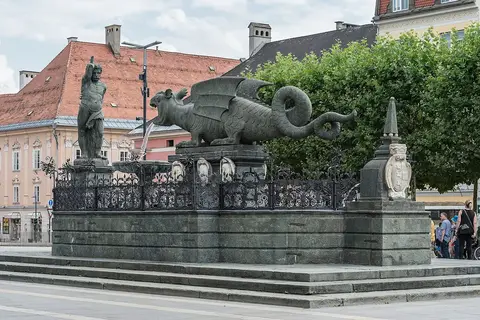
Klagenfurt Lindwurm
A winged dragon said to haunt marshes where Klagenfurt now stands; a famous ice-age rhinoceros skull modelled its fountain statue. Folklore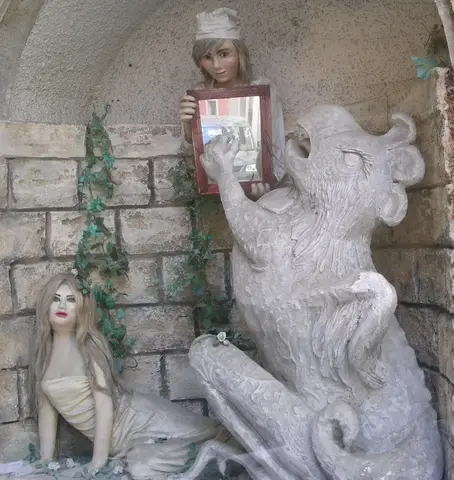
Basilisk of Vienna
A basilisk whose gaze turned people to stone was said to be found in a Vienna well in 1212 and killed by a baker’s apprentice with a mirror. Folklore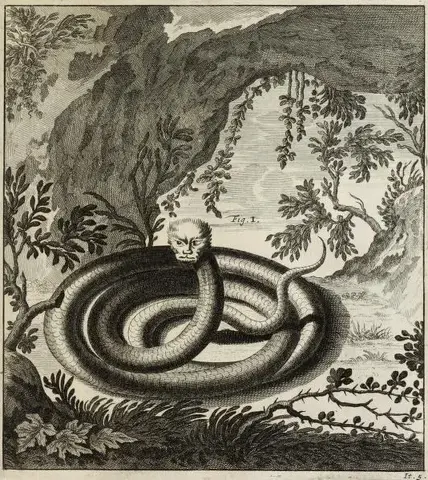
Tatzelwurm
The “worm with paws” of the Alps: a stubby, cat-faced lizard said to lurk in mountain crevices, hiss, and kill with its poisonous breath. Regional legend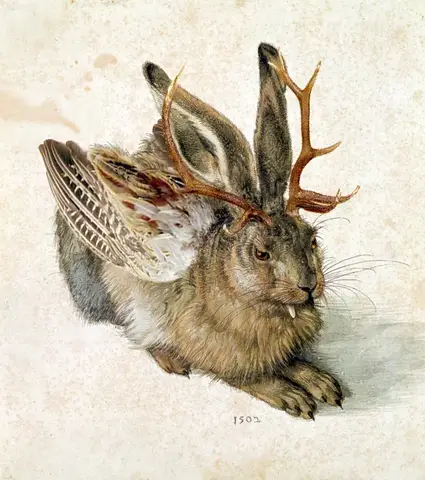
Wolpertinger
Bavaria’s tongue-in-cheek forest chimera – a horned hare with wings and duck’s feet – made by taxidermists, hunted by the gullible, loved by tourists. FolkloreThe legends of Austria
The Alps also feed older stories of the Tatzelwurm, a stubby, cat-faced lizard reported from Alpine valleys, and the wolpertinger, a hybrid hunters’ joke of the Bavarian and Austrian mountains. Many of these tales are tied to real landscapes and to buildings that still stand.
Hotspots
- Lindwurmbrunnen, Klagenfurt
The dragon monument on the Neuer Platz, modelled on a woolly rhinoceros skull.
- Basiliskenhaus, Vienna
Schönlaterngasse 7, with a carved basilisk and the story inscribed on its facade.
Sightings timeline
- June 1212 (legendary)The baker’s apprentice Basilisk of Vienna
A basilisk was said to have been found in a well, and a baker’s apprentice killed it by holding up a mirror. Sources give 12 and 26 June as the date.
- 1335The skull is found Klagenfurt Lindwurm
A gravel pit yielded the cranium of an ice-age woolly rhinoceros, which people took to be the skull of the dragon.
- 1577The original text Basilisk of Vienna
The inscription retelling the legend is based on a text of 1577, the earliest source usually cited.
- 1590The Lindwurm monument Klagenfurt Lindwurm
The Lindwurm monument was erected, credited to Ulrich Vogelsang, with its head modelled on the skull. Another source gives 1583 for the work.
- 1932The inscription restored Basilisk of Vienna
The facade was inscribed with the story, using the wording of the 1577 text.
- 1996–97Restoration Klagenfurt Lindwurm
The monument was removed for restoration between September 1996 and July 1997.