Country file · Europe
Cryptids of Germany
What cryptids are in Germany? The best-known are Heinzelmännchen, Tatzelwurm and Wolpertinger.
Germany’s folklore is the home of the household spirit and the water nymph. The best-loved example is Cologne’s Heinzelmännchen, the tiny night-working helpers who, according to the legend first written down in 1826, fled when a tailor’s curious wife scattered peas on the floor. August Kopisch’s 1836 poem spread the tale across the country, and a neo-Gothic fountain of 1899 beside the cathedral still honours it.
- 3 cryptids
- 5 recorded sightings
Cryptids reported in Germany
Heinzelmännchen
The Heinzelmännchen of Cologne: helpful night-working house spirits who vanished when a tailor’s curious wife scattered peas; honoured by a 1899 fountain. Folklore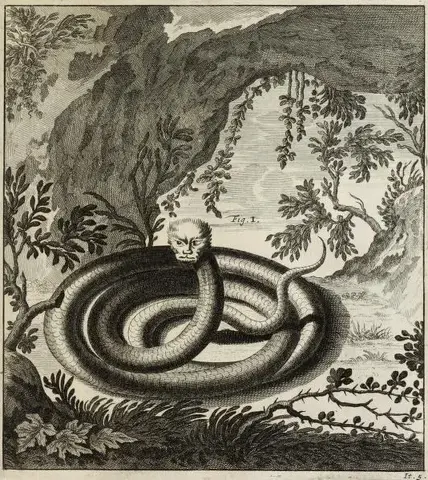
Tatzelwurm
The “worm with paws” of the Alps: a stubby, cat-faced lizard said to lurk in mountain crevices, hiss, and kill with its poisonous breath. Regional legend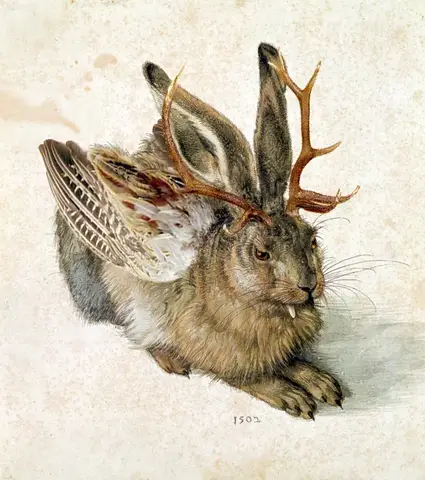
Wolpertinger
Bavaria’s tongue-in-cheek forest chimera – a horned hare with wings and duck’s feet – made by taxidermists, hunted by the gullible, loved by tourists. FolkloreThe legends of Germany
The south of the country, in the Alps and Bavaria, shares the alpine dragon-like tatzelwurm and the hoax-born wolpertinger with Austria and Switzerland. Visitors tracing the lore can combine Cologne’s Old Town with the villages and mountain trails of the Alpine foothills.
Hotspots
- Heinzelmännchenbrunnen, Cologne
The 1899 fountain on Am Hof beside Cologne Cathedral, showing the tailor’s wife and the fleeing helpers.
Sightings timeline
- 1826First written account Heinzelmännchen
Ernst Weyden recorded the legend, which was soon translated into English by Thomas Keightley (1828).
- 1836Kopisch’s poem Heinzelmännchen
August Kopisch’s ballad popularised the story across Germany and made his reputation.
- 1899Heinzelmännchenbrunnen Heinzelmännchen
The fountain showing the tailor’s wife and the vanished helpers was donated by the Cölner Verschönerungsverein.
- 1968Der Wolpertinger lebt Wolpertinger
Peter Kirein’s humorous book “The Wolpertinger Lives” was one of a run of popular titles that turned the joke creature into a fixture of Bavarian identity.
- 2003Walter Moers’s Rumo Wolpertinger
The novelist Walter Moers made a horned, wolf-like Wolpertinger the hero of Rumo & His Miraculous Adventures, carrying the name into international fantasy fiction.