FIELD FILE · SELMALAKE & SEA MONSTERREGIONAL LEGEND
Selma
Also known as Seljordsormen, The Seljord Serpent
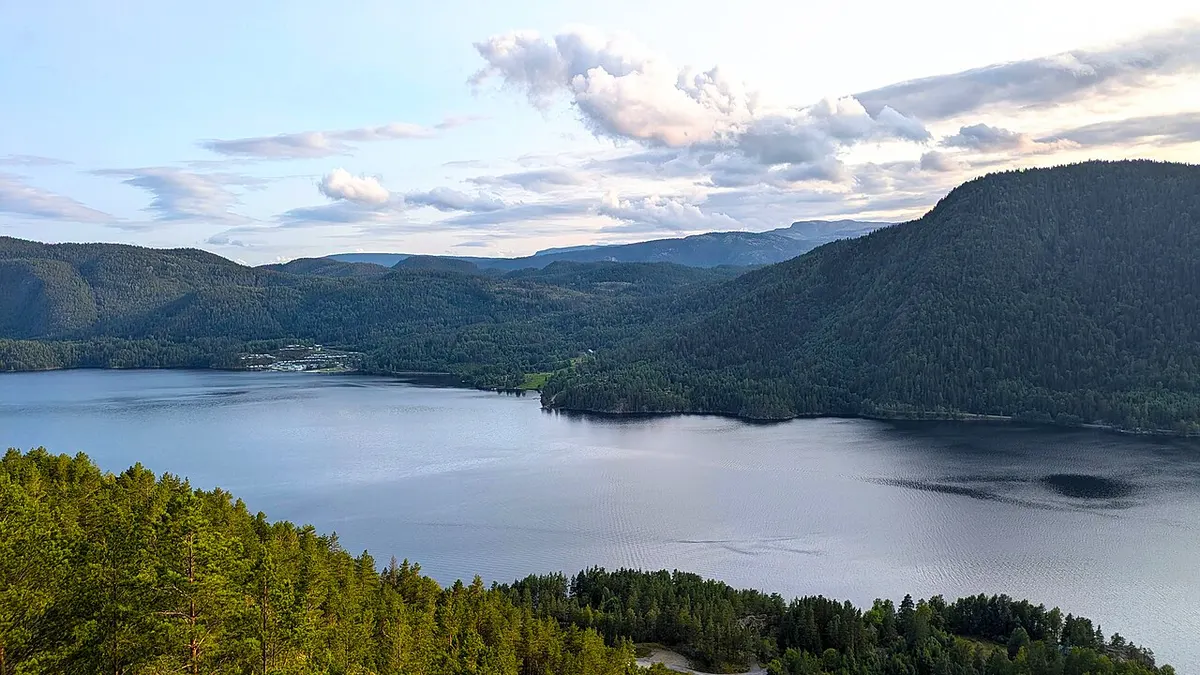
Norway’s best-known lake serpent, said since 1750 to swim the narrow lake at Seljord in Telemark, where she now graces the town’s coat of arms.
Seljord is a farming village in the hills of Telemark, in southern Norway, known for its medieval stone church and for Dyrsku’n, one of Norway’s largest agricultural fairs. Beside the village lies Seljordsvatnet, a narrow lake about 13 kilometres long – and, according to local lore, the home of a sea serpent the villagers fondly call Selma.
The oldest written account dates from 1750, when a man from neighbouring Bø was rowing across the lake from Ulvenes to Nes with a load of goods. A serpent reportedly rose up and overturned one of his boats. In 1786 the Seljord-born priest and topographer Hans Jacob Wille mentioned the remarkable creature again in his description of Seljord parish, and stories of the “Seljord serpent” have circulated ever since, peaking in hot, still summers.
In modern times Selma has drawn monster hunters from across Scandinavia and beyond. The best-publicised search came in August 1998, when the Swedish expedition leader Jan-Ove Sundberg brought a 12-member international team and a British TV crew to the lake for two weeks with sonar and a mini-submarine. Sundberg suggested any creature might be 3 to 10 metres long, but like every expedition before and since, the team came home without proof.
Seljord has embraced its monster wholeheartedly. Since 1989 a golden sea serpent on a red field has been the municipal coat of arms, a viewing tower stands on the shore, and campsite signs warn cheerfully of “sea serpent danger.” Selma is, in short, a small Norwegian village’s Nessie.
- Status
- Regional legend
- First reported
- 1750
- Best-known location
- Lake Seljordsvatnet, Seljord, Telemark
- Also called
- Seljordsormen, The Seljord Serpent
- Reported in
- Norway
What witnesses describe
A long, dark, serpent-like animal, usually estimated at 3 to 10 metres, sometimes showing a head and a series of humps. Some witnesses describe only a powerful wake or large waves moving across otherwise calm water.
Where and when it’s seen
Seljordsvatnet, a long, narrow valley lake in Telemark, especially on hot, calm summer days. Reports come from the road along the east shore as well as from boats.
Notable sightings
- 1750The capsized boat Between Ulvenes and Nes, Seljordsvatnet
A boatman from Bø reported that a serpent attacked and overturned one of his boats as he crossed the lake. It is the oldest written account of the creature.
- 1786The priest’s description Seljord parish
Hans Jacob Wille noted the strange creature of the lake in his published description of the parish, keeping the tradition on record.
- September 15, 1989A serpent on the coat of arms Seljord municipality
Seljord was granted its coat of arms, a gold sea serpent on red designed by Trygve Magnus Barstad – official recognition of Selma as the village’s emblem.
- August 1998Jan-Ove Sundberg’s expedition Seljordsvatnet
A 12-member international team led by Swedish monster hunter Jan-Ove Sundberg spent two weeks searching the lake with modern equipment, followed by a British TV crew. Local witnesses had reported two sightings earlier that summer.
What could explain it?
- Seljordsvatnet lay under glacial ice until roughly 10,000 years ago and is far too small to have hidden a breeding population of large unknown animals since then.
- Swimming elk, deer, otters or beavers, large fish such as pike, and floating logs can all create the impression of a long, humped creature.
- Boat wakes and wind-driven standing waves on a long, narrow lake can travel and persist in ways that look like a moving animal.
- Sea-serpent lore is old and widespread in Norway; Selma’s story fits that tradition, with modern expeditions adding a layer of media excitement.
Legend, culture and tourism
Selma is everywhere in Seljord: on the municipal coat of arms, in souvenirs, on signs warning of sjøormfare (sea serpent danger) and at a wooden observation tower by the water. Visitors to the Dyrsku’n fair, one of Norway’s biggest agricultural shows since 1866, often take a look at the lake while they’re in town.
Places to visit
A lakeside viewing tower built for serpent spotting overlooks the water where Selma is said to swim.
Where it’s reported
Norway Telemark
Selma in the news
No recent headlines about the Selma. Our news desk checks every day — see all cryptid news.
Sources
First published · Updated