FIELD FILE · ORANG-PENDEKHOMINIDWIDELY REPORTED
Orang Pendek
Also known as Uhang pandak (Kerinci), Sedapa, Gugu, Atu rimbu, Hantu pendek (Orang Rimba)
A short, powerfully built upright ape said to roam Sumatra’s Kerinci forests – the Southeast Asian cryptid taken most seriously by field researchers.
The orang pendek – Indonesian and Malay for “short person” – is a small, ground-dwelling primate that villagers, farmers and forest rangers in western Sumatra say walks upright like a human. Most accounts come from in and around Kerinci Seblat National Park, a vast mountain rainforest straddling the provinces of Jambi, West Sumatra, Bengkulu and South Sumatra, and part of the UNESCO-listed Tropical Rainforest Heritage of Sumatra.
The creature has many local names, which hints at how widely it is known: uhang pandak in Kerinci, gugu in Bengkulu and the south, sedapa in the south-eastern lowlands and atu rimbu in the Rawas district. The Orang Rimba, the forest-dwelling people of Jambi, speak of a hantu pendek (“short ghost”) that they treat as more of a spirit being than an animal, while many Malay-descended villagers describe it simply as a strong, shy animal of the deep forest.
Western interest began with Dutch colonial reports. In 1918 the Sumatran official L. C. Westenenk published accounts that included a 1910 encounter by a survey overseer in the Barisan Mountains and a 1917 sighting by a coffee planter, Mr Oostingh, near Bukit Kaba. More reports followed in the 1920s, before interest faded during the Second World War and Indonesia’s struggle for independence.
The modern search was revived by British writer Debbie Martyr, who first heard of the animal from her guide on Mount Kerinci in 1989 and went on to spend about fifteen years looking for it with photographer Jeremy Holden, interviewing hundreds of witnesses and setting camera traps. Both reported brief sightings, but no photograph was ever obtained. Later expeditions – including British teams led by Adam Davies and by the Centre for Fortean Zoology – collected footprint casts and hair samples.
Because the orang pendek is described as a plausible animal rather than a giant or a monster, it sits at the respectable end of cryptozoology. Supporters point out that Sumatra still hides large mammals in vast unsurveyed forest. Skeptics reply that after decades of searching there is still no body, no clear photograph and no DNA from an unknown ape – and that deforestation is shrinking the places such an animal could live.
- Type
- Hominid
- Status
- Widely reported
- First reported
- 1910
- Best-known location
- Kerinci Seblat National Park, Sumatra
- Also called
- Uhang pandak (Kerinci), Sedapa, Gugu, Atu rimbu, Hantu pendek (Orang Rimba)
- Reported in
- Indonesia
What witnesses describe
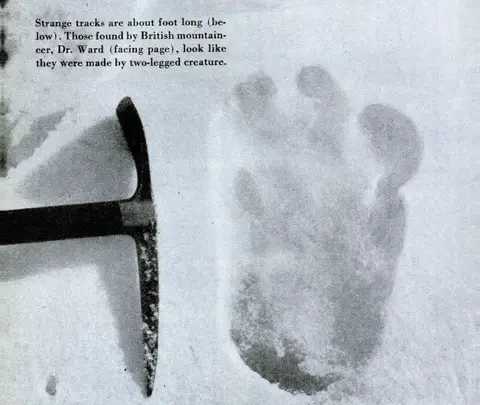
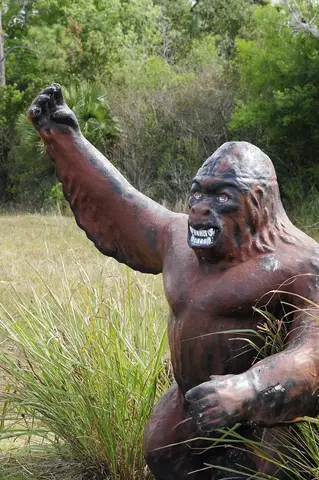
Usually described as 80–150 cm tall, walking upright on two legs, with broad shoulders, long powerful arms and short dark grey, black or honey-coloured fur, sometimes with a mane of longer hair down the back. Witnesses say it is shy, moves away from people and has been seen tearing open rotten logs for grubs. Footprints attributed to it are small and human-like.
Where and when it’s seen
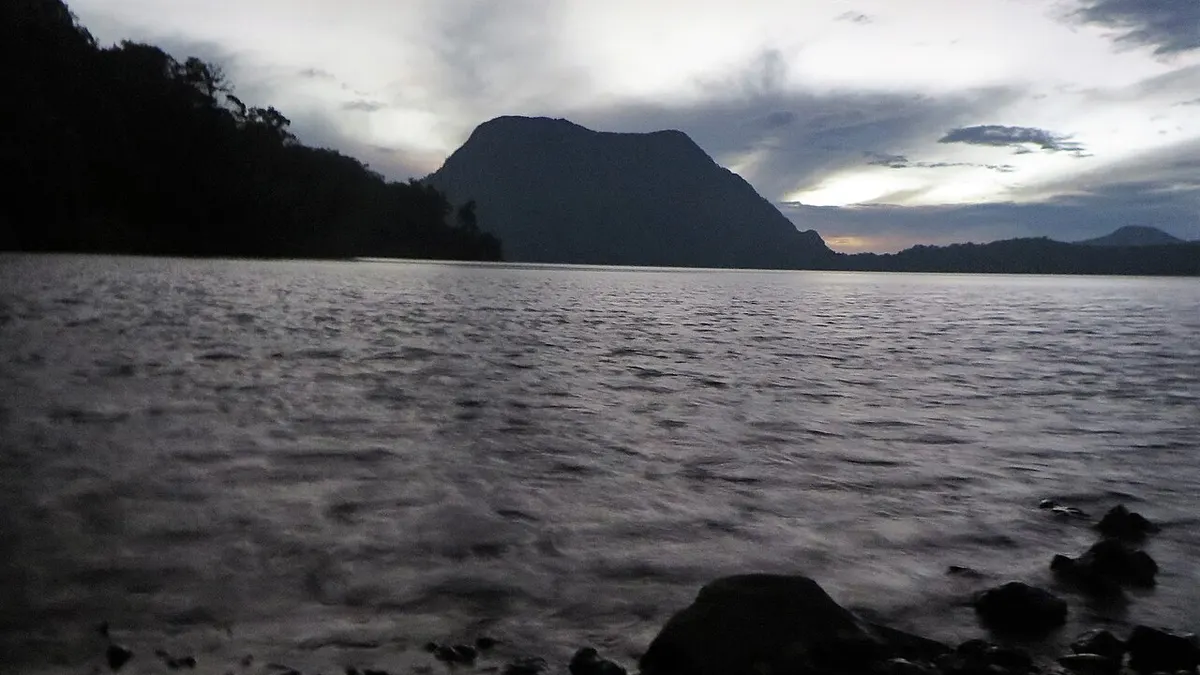
Montane and lowland rainforest in and around Kerinci Seblat National Park, especially the forests around Mount Kerinci and the Gunung Tujuh crater lake. Most sightings are by day, by farmers, hunters and rangers working at the forest edge.
Notable sightings
- 1910The overseer in the Barisan Mountains Near Loeboek Salasik, Barisan Mountains, Sumatra
A survey overseer staking out land in virgin forest reported a large, hairy, man-like creature running on two legs about 15 metres away. Governor L. C. Westenenk published the account in 1918, noting the witness insisted it was not an orangutan.
- 1917Mr Oostingh’s encounter Bukit Kaba, Bengkulu
Coffee planter Oostingh said he came upon a figure sitting on the ground that stood up to roughly his own height, walked off unhurriedly and swung into the trees on long arms. His description of “dusty black” hair is still quoted by researchers.
- May 1927Cramer’s close sighting Kerinci, Sumatra
Dutch plantation worker A. H. W. Cramer reported seeing a long-haired, black-skinned orang pendek about 10 metres away. It ran off, leaving small, human-like footprints.
- July 1989Debbie Martyr hears of the orang pendek Mount Kerinci, Jambi
Visiting as a travel writer, Debbie Martyr was told by her guide that he had seen the animal. She later reported her own sightings and spent some fifteen years searching for it with Jeremy Holden.
- 1999 onwardFootprint casts and hair samples Kerinci area, Sumatra
British explorers Adam Davies, Andrew Sanderson and Keith Townley cast footprints and collected hairs on expeditions to Kerinci, the first cast reportedly made in 1999. Microscopy was said to look promising, but DNA testing reportedly came back human.
- September 2009Centre for Fortean Zoology expedition Kerinci Seblat National Park
A four-person British team with an Indonesian guide said two members briefly glimpsed an upright, dark-furred animal. They brought back hair, a chewed piece of rattan and a footprint photo, but no confirmed result was ever published.
What could explain it?
- Misidentified known animals: sun bears often stand upright and leave strikingly human-like tracks, and gibbons or stray juvenile orangutans may account for some glimpses.
- Sumatran orangutans today live only in the far north of the island, hundreds of kilometres from Kerinci, so a lost southern population has also been suggested – though orangutans rarely walk on the ground for long.
- Plaster casts and brief sightings cannot be independently tested, and hair samples analysed so far have proved human or inconclusive.
- Sumatra has a rich body of forest-spirit folklore; skeptics argue that cryptozoologists have stitched together unrelated colonial anecdotes and local legends into a single ‘species’.
Legend, culture and tourism
The orang pendek is part of everyday lore in Kerinci, where guides and rangers swap stories, and the Orang Rimba of Bukit Duabelas tell of hantu pendek travelling in small groups. Local researcher Dally Sandradiputra of Sungai Penuh has interviewed dozens of witnesses and written a book on the creature. International television coverage, including a 2013 episode of Animal Planet’s Finding Bigfoot, has brought a trickle of adventure tourists to Kerinci’s trailheads.
Places to visit
Southeast Asia’s highest caldera lake, reached by a forest trail, is the area most closely associated with modern orang pendek reports.
Sumatra’s highest volcano, where Debbie Martyr first heard of the creature, is a popular two-day climb with local guides from Kersik Tuo.
Watch
 ▶ VIDEO
Apakah Orang Pendek di Hutan Sumatera Ada
Mongabay IndonesiaShort Indonesian-language report from the conservation news site Mongabay on the evidence and the people searching for the orang pendek.
Where it’s reported
Indonesia Jambi West Sumatra Bengkulu South Sumatra
Orang Pendek in the news
No recent headlines about the Orang Pendek. Our news desk checks every day — see all cryptid news.
Sources
- The Guardian: On the trail of the orang pendek, Sumatra’s mystery ape (Richard Freeman, 2011)
- Mongabay Indonesia: Apakah Orang Pendek di Hutan Sumatera Ada? (2021)
- Skeptoid #77: Orang Pendek – Forest Hobbit of Sumatra
- Oneindia/ANI: Explorers spot legendary ape-man in Sumatra (2009)
- Wikipedia: Orang pendek
First published · Updated