FIELD FILE · EBU-GOGOHOMINIDFOLKLORE
Ebu Gogo
Also known as Ebu gogo of the Nage, Lai ho’a (Lio ape-men, related tradition)
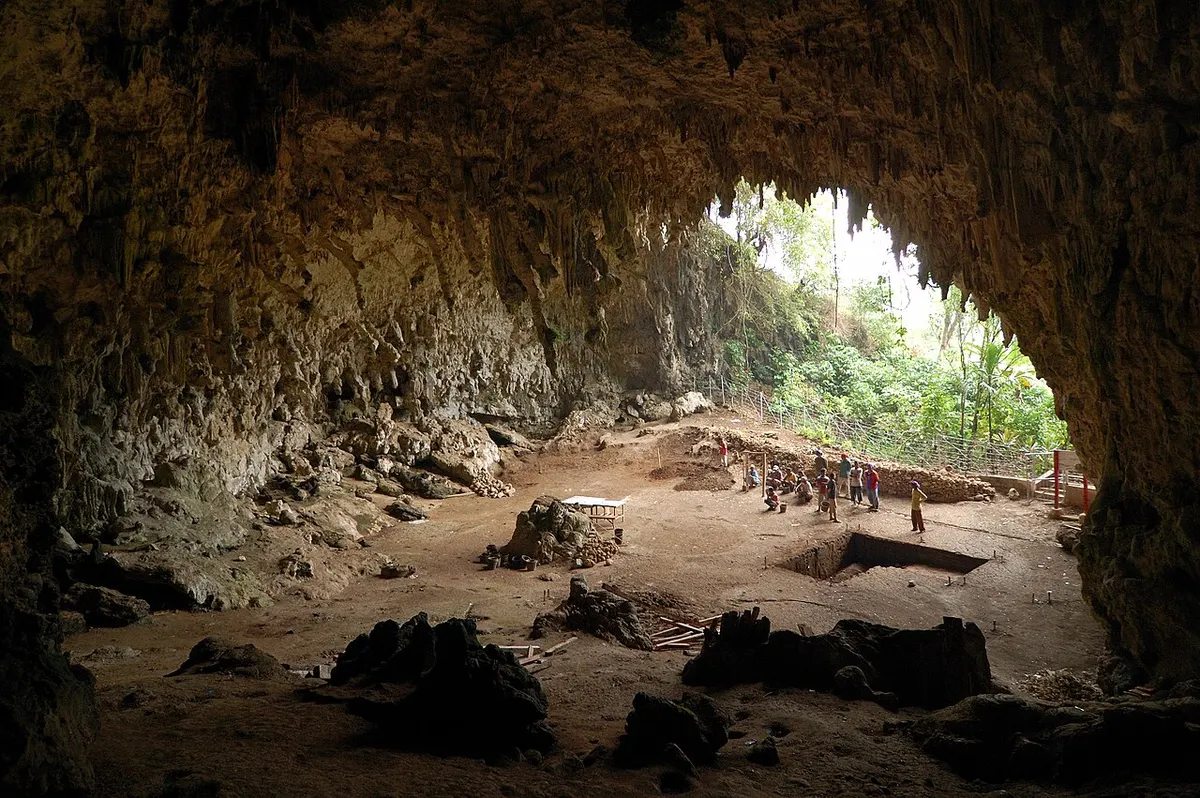
Small, hairy “grandmothers who eat anything” from the folklore of Flores – a tale that drew new attention after the 2003 discovery of the hobbit.
The ebu gogo are small, hairy, human-like beings in the oral traditions of the Nage people of central Flores, an island in the Indonesian province of East Nusa Tenggara. In the Nage language ebu means “grandparent” or “grandmother” and gogo means something like “one who eats anything” – so the name translates loosely as “greedy old one”. In the stories they raid fields and steal food, eat raw whatever they can find, and murmur to each other in their own language or parrot back human speech.
Nage storytellers describe the ebu gogo as fast-running creatures about a metre to a metre and a half tall, with broad faces, wide mouths, flat noses, long arms and hairy bodies. The best-known tale explains why they are gone: tired of their thefts, villagers gave the ebu gogo palm fibre to make clothes, and when the creatures carried it into their cave the people set it alight, burning them out. A pair is sometimes said to have escaped into the forest, leaving room for the idea that a few survive.
The legend leapt into global headlines in October 2004, when Australian and Indonesian researchers announced Homo floresiensis, a tiny extinct human species found in 2003 in Liang Bua cave in western Flores and nicknamed “the hobbit”. Early dates suggested the species might have lived until about 12,000 years ago, and some scientists and journalists wondered whether the ebu gogo were a folk memory of real encounters with these little people.
Anthropologist Gregory Forth, who had worked among the Nage since 1984, became the leading voice for taking such folk accounts seriously, and later collected more than a hundred testimonies about similar ‘ape-men’ (lai ho’a) among the neighbouring Lio people. Most researchers remain unconvinced. The Nage live more than 100 km from Liang Bua, and in 2016 a re-analysis of the cave showed that the H. floresiensis bones and tools are at least 50,000 years old – long before modern humans are known to have lived on Flores.
Whatever its origins, the ebu gogo story is a fascinating example of how a living oral tradition can intersect with one of the biggest palaeoanthropological discoveries of the century, and it reminds outsiders that Flores’ peoples were telling stories about small forest people long before scientists arrived.
- Type
- Hominid
- Status
- Folklore
- First reported
- Pre-colonial
- Best-known location
- Nage country, central Flores
- Also called
- Ebu gogo of the Nage, Lai ho’a (Lio ape-men, related tradition)
- Reported in
- Indonesia
What witnesses describe
In Nage accounts: about 1–1.5 m tall, upright and swift, with hairy bodies, broad flat faces, wide mouths and long arms; females are said to have long, pendulous breasts. They mumble in their own speech and can mimic human words.
Where and when it’s seen
Caves and forested hills of central Flores in Nage country, near the volcano Ebulobo, where the stories place their former homes.
Notable sightings
- 18th century (traditional)The burning of the cave Nage country, central Flores
According to Nage tradition, villagers gave the ebu gogo palm fibre and then set it on fire inside their cave, ending their raids. The date comes from oral history and cannot be checked.
- 1998Gregory Forth records the tradition Flores, Indonesia
In his ethnography of the Nage, Beneath the Volcano, anthropologist Gregory Forth described ebu gogo stories in detail, years before any hobbit fossils were known.
- September 2003The hobbit is found at Liang Bua Liang Bua, western Flores
Indonesian and Australian archaeologists uncovered the small skeleton known as LB1 about six metres down in Liang Bua cave. It became the type specimen of Homo floresiensis.
- October 2004The discovery goes public Published in <em>Nature</em>
The announcement of the new species, then thought to have survived until about 12,000 years ago, prompted reporters to visit Nage villages and ask about the ebu gogo.
- March 31, 2016The hobbits are re-dated Liang Bua, Flores
A new study in Nature showed that the layers holding the hobbit’s bones and stone tools are between about 190,000 and 50,000 years old, not 12,000 – undermining the idea of recent contact with modern people.
- 2022<em>Between Ape and Human</em> Flores, Indonesia
Gregory Forth published a book arguing that Lio accounts of small ‘ape-men’, gathered between 2003 and 2018, could reflect a surviving hominin – a proposal most anthropologists regard as unproven.
What could explain it?
- Folk memory is unlikely to stretch back 50,000 years: the re-dating of Liang Bua puts the hobbit’s disappearance long before modern humans are known to have lived on Flores.
- Similar stories of small hairy forest people exist across Southeast Asia, which suggests a widespread storytelling motif rather than a specific memory of H. floresiensis.
- Macaques, which live on Flores, raid crops and could underlie tales of food-stealing creatures; expeditions to reputed ebu gogo caves have found only empty caves or monkeys.
- The Nage and the Manggarai people who live near Liang Bua have different languages and traditions, and the ebu gogo is not a Manggarai story.
Legend, culture and tourism
The ebu gogo belongs to Nage oral tradition and is still told in villages around the Ebulobo volcano. Since 2004 it has become part of global popular science, appearing in documentaries about the hobbit, while Liang Bua cave, just north of Ruteng, has become a stop for travellers interested in human evolution.
Places to visit
The limestone cave where Homo floresiensis was found lies in Manggarai Regency, slightly north of the town of Ruteng.
Watch
 ARCHIVE.ORG2:39:24
Folk Zoology Conference 2024
Floe Foxon (Folk Zoology Society)Academic conference on folklore and zoology; from 1:31:20 anthropologist Gregory Forth discusses Flores ‘ape-men’ and <em>Homo floresiensis</em>. CC BY-NC-ND 4.0.
Where it’s reported
Indonesia East Nusa Tenggara
Ebu Gogo in the news
No recent headlines about the Ebu Gogo. Our news desk checks every day — see all cryptid news.
Sources
First published · Updated