Field file · Lake & sea monster · Regional legend
Mamlambo
Also known as uMamlambo, Sis’ Mamlambo, iNathlathu (Bhaca name), Brain Sucker (1997 press nickname)
A river being of Xhosa and Zulu belief, a purchased familiar tied to wealth, that made headlines in 1997 as a ‘giant reptile’ blamed for drownings.
Two quite different things go by the name Mamlambo. In Xhosa and Zulu tradition, recorded by ethnographers in the early and mid 20th century, the mamlambo (‘mother of the river’) is not a wild animal but a familiar: a being that can be obtained, for a price, to multiply its owner’s money and cattle. The price is said to be paid in the lives of the owner’s own relatives. Its form is described as ‘subject entirely to individual fancy’, in the words of the missionary-scholar John Henderson Soga, and in some accounts it is a snake and in others a water creature or even a woman-like figure.
The second Mamlambo is a creature of the news. In early 1997 South African newspapers, including Johannesburg’s The Star and the Cape Argus, reported villagers near Mount Ayliff on the Mzintlava River in the Eastern Cape who blamed a ‘giant reptile’ for a run of deaths. Witnesses were said to describe an animal about 20 metres long with a horse-like head, a snake’s neck, short legs, a fish-like lower body and a green glow at night. As many as nine drownings between January and April were attributed to it, and the press dubbed it the ‘Brain Sucker’ because the victims’ heads and necks were damaged.
Police gave a plain explanation: the river was high after heavy rain, the victims had drowned, and river crabs had eaten the soft tissue of the bodies before they were found. Villagers, by contrast, read the injuries as the work of the mamlambo. Writers who study the tradition, among them the anthropologist Felicity Wood, see the mamlambo as a way of talking about money, inequality and the pull of Western-style wealth, and compare it with Mami Wata, the seductive water spirit who brings riches at a cost.
The 1997 monster is therefore best treated as a news-driven lake-monster story layered on top of a much older belief about wealth and danger. The traditional mamlambo is a living cultural idea for many people in the Eastern Cape, and the details here are given as reported claims, not as fact.
What does Mamlambo look like?
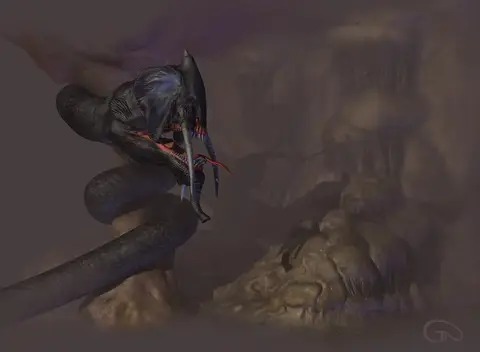
Traditional accounts vary with the teller. The 1997 press description was a roughly 20 m creature with a horse’s head, snake-like neck, short legs, fish-like lower body and a green light that shone at night.
Where is Mamlambo seen?
Deep pools and rivers of the Eastern Cape and neighbouring KwaZulu-Natal; the 1997 reports centred on the Mzintlava River near Mount Ayliff, after heavy rain.
Mamlambo sightings
- 1930sPondoland interviews Pondoland, Eastern Cape
The anthropologist Monica Hunter’s informants said men could obtain a mamlambo for wealth, in some accounts bringing it home from the Witwatersrand mines.
- 1931Soga’s account of the familiar Eastern Cape
The missionary-ethnographer John Henderson Soga wrote that the form of the mamlambo was a matter of individual fancy, one of the older printed records of the belief.
- 1997Searches by officials Mzintlava River
One account says armed conservation officers patrolled the river after the reports without finding anything; the claim comes from a secondary source.
- January–April 1997The ‘Brain Sucker’ reports Mzintlava River, near Mount Ayliff
South African newspapers reported villagers’ claims of a giant river creature and up to nine deaths. Police attributed the deaths to drowning and the injuries to river crabs.
Is Mamlambo real? What could explain it
- Police said the 1997 victims had drowned in a river swollen by heavy rain and that river crabs, which feed on soft tissue, caused the wounds to the heads and necks.
- Large snakes, crocodile-like animals and floating debris seen at night in swollen rivers are a common source of monster reports, and the reported glow and size grew with retelling in the press.
- Scholars read the traditional mamlambo as a social metaphor: wealth gained through a dangerous bargain, reflecting migrant labour, inequality and the temptations of money.
Legend, culture and tourism
The mamlambo features in Eastern Cape oral tradition and in scholarly writing on witchcraft and wealth. It has also appeared in popular media, including a search episode of the SyFy series Destination Truth that found no evidence of the creature. Readers should note that the belief is real to many local people and is not merely a monster story.
Places to visit
The river valley in the former Transkei where the 1997 reports were centred; there are no organised monster tours.
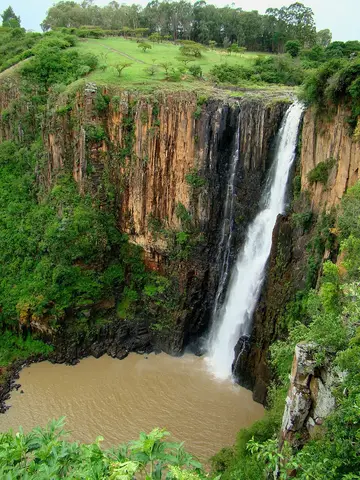
South Africa’s better-known water-serpent site, home of the inkanyamba legend.
Where it’s reported
Sources
First published · Updated