FIELD FILE · INKANYAMBALAKE & SEA MONSTERREGIONAL LEGEND
Inkanyamba
Also known as Nkanyamba, Howick Falls Monster, Snake in the sky
The great storm-serpent of Zulu and Xhosa belief, said to live in the pool beneath KwaZulu-Natal’s Howick Falls and to ride the summer tornadoes.
In Zulu and Xhosa tradition the inkanyamba is a vast serpent bound up with water and weather. It lives in deep river pools, and when it rises into the sky its body becomes the funnel of a tornado; summer storms, hail and destructive winds are signs of its anger or of its travels in search of a mate. Many people regard it with real fear and respect, and in this sense it is less a “cryptid” than a powerful being of the natural world, approached with care and ritual.
Its most famous home is the deep pool beneath Howick Falls, a 95-metre waterfall on the uMngeni River in the KwaZulu-Natal Midlands, known in isiZulu as KwaNogqaza, “the place of the tall one”. According to local lore, only izangoma (traditional healers) may safely approach the water there, to pray and make offerings to the inkanyamba and the ancestors. Other pools on the uMngeni and uMkhomazi river systems and around Hogsback in the Eastern Cape have their own traditions.
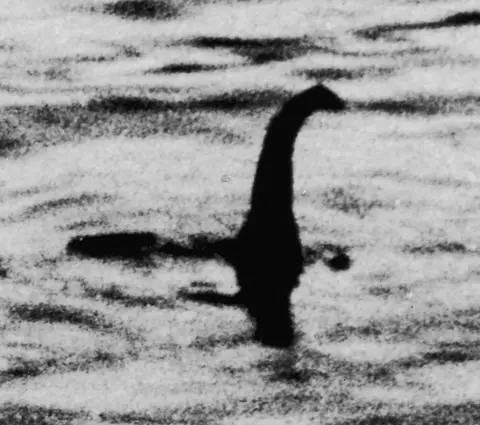
From the 1970s onward, the Howick legend also took on the shape of a modern lake-monster story. A caravan-park caretaker who worked near the falls from 1969 to 1985 said he twice saw a long neck and head rise from the pool, and in 1995 a local man who reported a snake-like head offered a reward for a photograph; the pictures submitted were widely judged to be hoaxes. Local media nicknamed the creature “Howie”, and it has featured in international TV series on mysterious animals.
Scholars have studied how the inkanyamba helps communities make sense of violent weather. After tornadoes struck the Hogsback–Alice area of the Eastern Cape in the late 1990s, researchers recorded clay sculptures and stories in which the serpent was blamed – one belief holds that it mistakes shiny corrugated-iron roofs for water and is enraged when it discovers the trick. The figure thus links environmental change, modern housing and long-standing belief.
- Status
- Regional legend
- First reported
- Pre-colonial
- Best-known location
- Pool below Howick Falls (KwaNogqaza), uMngeni River, KwaZulu-Natal
- Also called
- Nkanyamba, Howick Falls Monster, Snake in the sky
- Reported in
- South Africa
What witnesses describe
A gigantic serpent, often with a horse-like head, a crest or mane along its back and sometimes several heads. In the sky it appears as a dark, twisting funnel cloud. Eyewitnesses at Howick describe a long neck and head rising from the water.
Where and when it’s seen
Deep river pools and waterfalls in KwaZulu-Natal and the Eastern Cape, especially the plunge pool below Howick Falls. It is said to be most active in summer, the storm season.
Notable sightings
- 1970s and 1981The caretaker’s sightings Howick Falls, KwaZulu-Natal
Johannes Hlongwane, who looked after a caravan park beside the falls from 1969 to 1985, reported seeing the creature twice (sources give 1971 or 1974 for the first sighting), describing a head and long neck rising high out of the pool and a crest along its back.
- September 1995A head in the plunge pool Howick Falls viewing platform
A local restaurant owner said he saw a snake-like head and neck emerge from the water below the falls. Without a camera, he offered a reward for a photograph; the images later published in response were dismissed as hoaxes.
- 1998Tornadoes and the snake in the sky Hogsback–Alice area, Eastern Cape
Local accounts linked destructive tornadoes in the area to the inkanyamba. Researcher Felicity Wood later documented clay figures and narratives made by local artists in response to the storms.
What could explain it?
- Weather made visible: the inkanyamba gives shape and meaning to tornadoes, waterspouts and summer hailstorms, which are genuinely destructive in the region.
- Large eels and crocodiles: giant African mottled eels, which can exceed 1.5 m, live in the rivers, and Nile crocodiles once ranged widely; either seen briefly could be taken for a monster.
- Hoaxes and tourism: photographs submitted after the 1995 reward were judged fakes, and “Howie” stories have been good publicity for Howick.
- Living belief rather than zoology: for many people the inkanyamba is a spiritual being, so the question of whether it is an unknown animal misses the point.
Legend, culture and tourism
The inkanyamba remains part of Zulu and Xhosa belief, respected by izangoma who make offerings at the falls. It appears in South African art – notably the clay tornado-serpents of the Eastern Cape – in music, children’s books and the Midlands Meander tourist route. Howick Falls is one of KwaZulu-Natal’s best-known viewpoints, a short drive from Pietermaritzburg.
Places to visit
A viewing platform in the town looks straight down on the 95-metre falls and the pool where the inkanyamba is said to live.
The regional arts-and-crafts tourist route around Howick has promoted the inkanyamba legend.
Watch
 ▶ VIDEO
The Midlands Meander Inkanyamba
MidlandsMeanderA visit to the foot of Howick Falls with traditional healer Elliot Ndlovu, who talks about the inkanyamba.
 ▶ VIDEO
Howick Falls Monster: Eyewitnesses Swear They Saw a Real-Life MONSTER! Pt.1
Storyteller DigitalSegment from the 1990s–2000s TV series Animal X investigating the Howick Falls monster and its eyewitnesses.
Where it’s reported
South Africa KwaZulu-Natal Eastern Cape
Inkanyamba in the news
No recent headlines about the Inkanyamba. Our news desk checks every day — see all cryptid news.
Sources
First published · Updated