Field file · Flying · Folklore
Impundulu
Also known as Lightning bird, Thekwane, Izulu, Inyoni yezulu
The ‘lightning bird’ of Zulu, Xhosa and Mpondo belief, a thunder-making witch’s familiar that can take human form; a living belief in southern Africa.
Impundulu is the lightning bird of southern African tradition, known among the Zulu, Xhosa and Mpondo peoples and under other names such as izulu and inyoni yezulu (‘bird of heaven’). In its fullest form the belief says that the bird’s body is the lightning, its wings are the thunder and its droppings are the forked flash. Most often it is described as a large black-and-white bird of prey, though accounts differ: a diviner described a bird’s head on a human-like body, while Mpondo informants spoke of a white bird with red legs and bill.
The impundulu is above all a familiar. It is said to be kept by a particular woman, often a witch, who may inherit it from her mother and pass it to a daughter. To its owner it can appear as a handsome young man and lover; to her enemies it brings sudden death, with pain between the shoulders followed by coughing blood. Anthropologists who recorded the belief in the 1930s, such as Monica Hunter among the Mpondo, noted that almost no one claimed to have seen one, yet most people believed in it.
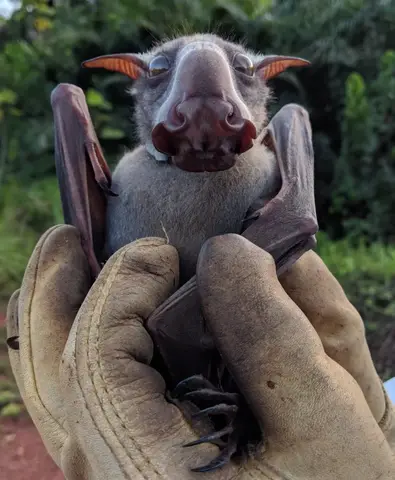
The bird also has practical uses in the tradition. Its fat was thought to be powerful lightning medicine, and eggs said to be laid underground where lightning strikes could be dug up. Some people identify the hammerkop with the bird, and herbalists are said to have used poisoned milk, a food it is fond of, to try to destroy it.
Because the impundulu is tied to accusations of witchcraft, the belief has had serious consequences. In 2005 a South African man was convicted of culpable homicide after killing a toddler he believed was an impundulu. This entry describes the belief as a tradition, with respect for the people who hold it and with no suggestion that the bird exists as an animal.
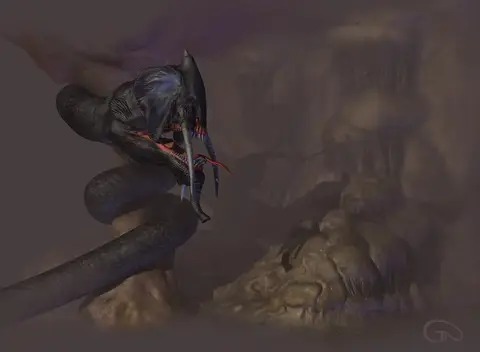
What does Impundulu look like?
A human-sized black-and-white bird of prey, sometimes with red legs and bill or iridescent peacock-like feathers; in some accounts it can take the form of a handsome young man.
Where is Impundulu seen?
Thunderstorms and the homesteads of its supposed owners in Pondoland, Zululand and the Eastern Cape; its eggs are said to be laid underground at lightning-strike sites.
Impundulu sightings
- 1915Written in Xhosa dictionaries Lovedale, Eastern Cape
The enlarged edition of Albert Kropf’s Xhosa dictionary, prepared by Robert Godfrey and printed at the Lovedale mission press, is one of the early printed records of the belief.
- 1930sMpondo interviews Pondoland
Monica Hunter recorded detailed accounts of the impundulu from Mpondo informants, including deaths attributed to it and the strategies used against it.
- November 7, 2005A homicide conviction South Africa
The Herald reported that a man was convicted of culpable homicide for killing a two-year-old child he believed to be an impundulu.
Is Impundulu real? What could explain it
- Lightning strikes are real and deadly in the highveld and Eastern Cape, and a personified lightning bird gives a ready explanation for apparently targeted deaths.
- Bird species such as the hammerkop, and blood-feeding birds like the red-billed oxpecker, have been proposed as real animals behind parts of the description.
- As a witch’s familiar the impundulu works as a social explanation for illness and misfortune, and accusations have sometimes led to real harm.
Legend, culture and tourism
The lightning bird appears in southern African folklore studies, in the work of the anthropologist Monica Hunter and in modern fiction, notably as an antagonist in Marlon James’s Black Leopard, Red Wolf and Moon Witch, Spider King. It remains a living belief, so it is treated here as tradition.
Where it’s reported
Sources
First published · Updated