Field file · Other · Folklore
Kludde
Also known as Kludde the shapeshifter, Back-rider of Flanders
Kludde, the shape-shifting back-rider of Flemish folklore: a chain-rattling black dog, horse or tree with two blue flames that dunks night walkers.
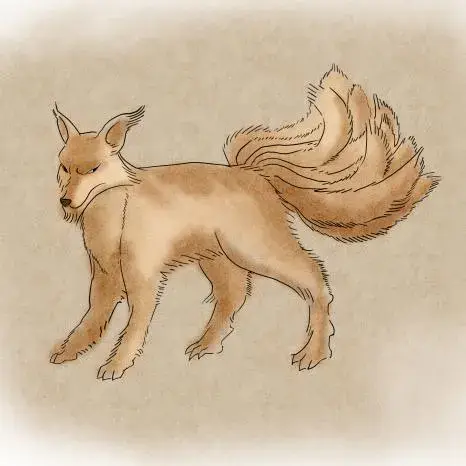
Kludde is a night spirit of Flanders and Brabant, in what is now Belgium, best known for having no fixed shape. In folk accounts it appears as a large black dog dragging a chain, as a half-starved horse, a sheep, a cat, a bat, a frog or a huge black bird. In one famous trick it is a slim sapling that grows taller as a traveller watches, until its top vanishes into the clouds. The one constant is a pair of small blue flames that float ahead of it.
The creature belongs to a family of “back-riders” found across Europe: spirits that leap onto a passer-by and ride him. Reports tie Kludde to the Dender river country around Dendermonde, Aalst and Merchtem, and to travellers out alone at night, such as ferrymen, stable boys and night fishermen. As a horse it invites a walker to mount, gallops to the nearest water and tips the rider in, then laughs. As a dog it springs on a person’s neck and wrestles them to the ground.
Its menace is more humiliating than deadly, and it must leave by daybreak. The name is said to come from the cry it gives as it flees, and some tellings have it calling its own name. East Flemish stories add a human origin: Kludde is a living man who sold his soul for a magic hide, and burning that hide in a bread oven frees him. Other storytellers treat it as a river spirit in the nix family, or as a local werewolf.
Folklorists date its first written record to 1840, a report from Ternat attributed to Baron de Saint-Genois, and the English folklorist Benjamin Thorpe described it in 1852 as “a perfect Proteus.” It remains a regional curiosity, and like other Flemish night creatures it is more often retold as a Halloween story than feared.
What does Kludde look like?
Shape-shifting: a black dog dragging a chain, a gaunt horse, a sheep, cat, bat, frog or a growing tree. Always accompanied by two floating blue flames.
Where is Kludde seen?
Dark country lanes, river banks and ponds in foggy weather; the Dender valley, Brabant and East Flanders. Active at night, gone by dawn.
Kludde sightings
- 1840First recorded report Ternat, Brabant
The earliest known written record is credited to Baron de Saint-Genois at Ternat, describing the back-riding shapeshifter.
- 1852Thorpe’s description Netherlandish tradition
The English scholar Benjamin Thorpe called the creature a perfect Proteus in his translation of northern European legends.
Is Kludde real? What could explain it
- Blue flames and a spirit that leads travellers astray strongly resemble will-o’-the-wisp lights, marsh gas glimmering over river meadows.
- Tales of a creature that throws riders into water and drowns the careless are warnings that were handy for parents with children near rivers at night.
- Stories of a man forced to wear a hide are werewolf folklore in local dress; in the flat country Kludde is sometimes simply called a werewolf.
Legend, culture and tourism
Kludde is part of Flanders’s lively tradition of night legends, alongside figures such as Lange Wapper of Antwerp. It features in Dutch- and Flemish-language folklore collections and bestiaries.
Where it’s reported
Sources
First published · Updated