FIELD FILE · QUEENSLAND-TIGERBIG CATREGIONAL LEGEND
Queensland tiger
Also known as Yarri, Marsupial tiger, Striped marsupial cat
A striped, tree-climbing “marsupial cat” of north Queensland’s rainforests, reported since 1871 and linked by some to the extinct marsupial lion.
The Queensland tiger is a striped, savage, cat-like animal said to live in the rainforests and rocky ranges of far north Queensland. Witnesses describe something about the size of a dingo or a large dog, with a round, cat-like head, prominent front teeth, a long tail and bold stripes across its body – an animal that climbs trees when chased and snarls at anyone who corners it. Nothing quite like it is known to science, which is exactly what has kept the story alive for 150 years.
The first written reports come from the early colonial frontier around Cardwell on Rockingham Bay. In 1871 the police magistrate B. G. Sheridan wrote to the Zoological Society of London describing how his teenage son, out with a small terrier near the coast, had come upon a dingo-sized animal crouching in long grass, with a cat-like head, a long tail and a striped body; the boy wounded it with a pistol shot and retreated. Similar tracks were reported by survey parties north of Cardwell over the following two years.
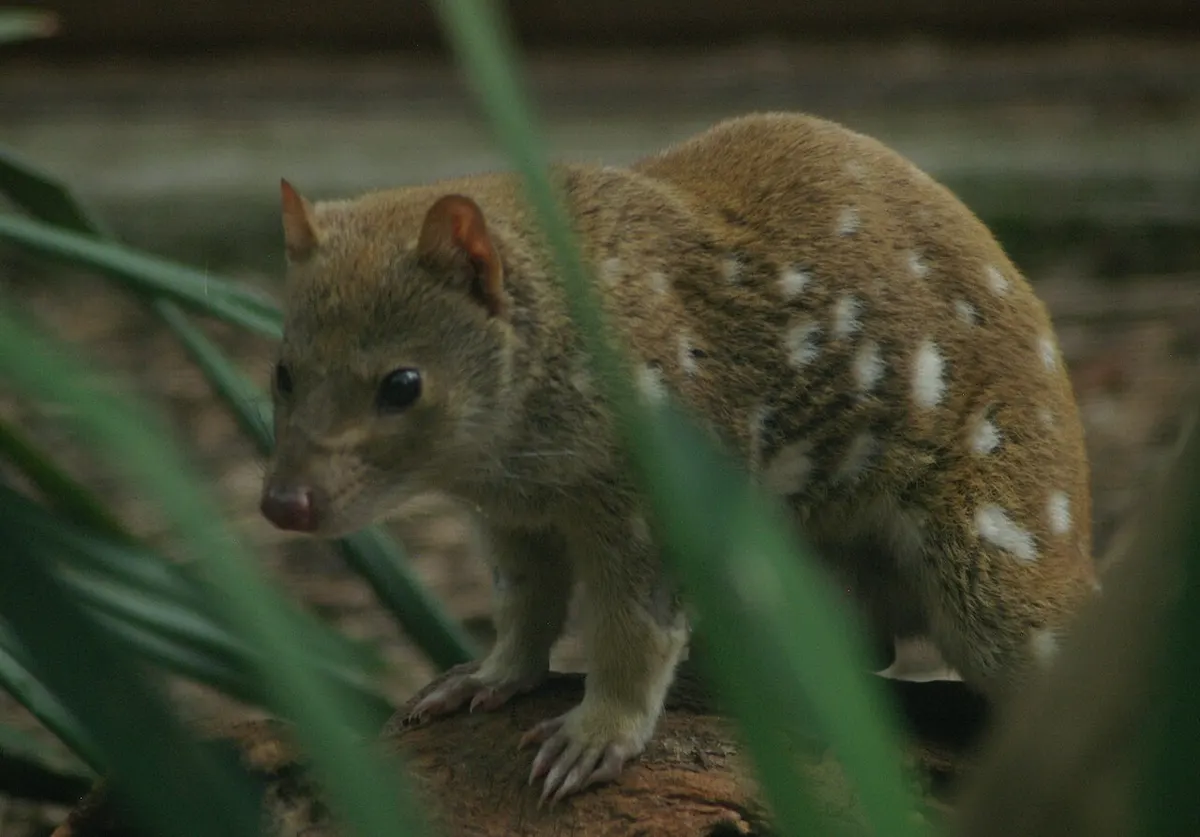
In the early 1880s the Norwegian explorer Carl Lumholtz, living with Aboriginal people on the Herbert River, heard about an animal they called yarri: dingo-sized but shorter in the leg, with a long tail, very savage, and in the habit of fleeing up trees, where hunters would not follow. When men brought him a “yarri”, it proved to be a spotted-tailed quoll – the name, he learned, covered the whole quoll family – but Lumholtz remained convinced in his book Among Cannibals (1889) that a much larger yarri lived in the mountains and was waiting to be discovered.
Naturalists took the idea seriously for decades. In 1926 A. S. le Souef described a “striped marsupial cat” in The Wild Animals of Australasia, and the mammalogist Ellis Troughton repeated the description in his Furred Animals of Australia. Reports continued from the Atherton Tableland, Mount Bellenden Ker, Millaa Millaa and the Herberton–Ravenshoe road into the 1970s, when researcher Janeice Plunkett collected more than a hundred accounts of sightings and shootings.
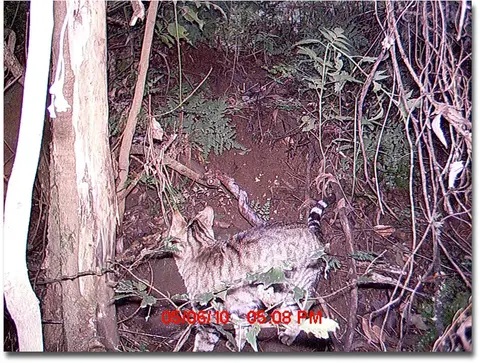
Cryptozoologists have often proposed that the animal is a surviving Thylacoleo, the powerful marsupial lion that vanished from the fossil record tens of thousands of years ago. But reports have dwindled since the 1950s, no specimen has ever been kept, and modern sightings that have been investigated have tended to turn out to be feral cats. As the zoologist Darren Naish has noted, the Queensland tiger was far more popular a few decades ago than it is now – a legend slowly fading in the absence of hard evidence.
- Type
- Big cat
- Status
- Regional legend
- First reported
- 1871
- Best-known location
- Rainforests and tablelands of far north Queensland
- Also called
- Yarri, Marsupial tiger, Striped marsupial cat
- Reported in
- Australia
What witnesses describe
Roughly dingo- or large-dog-sized, with relatively short legs, a round or flattish cat-like head, large front teeth, a long tail and dark stripes across a yellowish, tan or grey body. Described as fierce, agile and able to climb trees.
Where and when it’s seen
Tropical rainforest, rocky ranges and forest edges of far north Queensland – especially the Cardwell coast, the Herbert River valley, Mount Bellenden Ker and the Atherton Tableland – with scattered reports from Cape York and further south. Encounters are usually at dusk or at night.
Notable sightings
- 1871The Cardwell encounter Rockingham Bay, near Cardwell
B. G. Sheridan reported to the Zoological Society of London that his 13-year-old son’s terrier had tangled with a dingo-sized, striped animal with a cat-like head. The boy fired a pistol, wounding it, and backed away.
- 1880s (published 1889)Lumholtz’s yarri Herbert River, north Queensland
Carl Lumholtz recorded Aboriginal descriptions of the yarri, a savage, tree-climbing predator of the Coast Range. The animal his guides caught was a spotted-tailed quoll, but he believed a larger, undiscovered yarri existed.
- 1926The “striped marsupial cat” <em>The Wild Animals of Australasia</em>
A. S. le Souef’s natural history included the creature as a striped marsupial cat, giving the reports a place in mainstream literature.
- 1932Snarling on Bellenden Ker Mount Bellenden Ker
According to a Courier-Mail report retold in the local press, guide and bushman Arnold Leamann saw a dingo-sized, striped animal with a short, flat head perched on a branch, which snarled and spat at him.
- Early 1970sOn the Upper Barron road Near Upper Barron, Atherton Tableland
Jane Leadley, a long-time resident near Lake Barrine, described a dog-sized animal with a flat head and a long, striped tail crossing the road between the Mount Hypipamee crater road and Longlands Gap.
What could explain it?
- Large feral cats, some with tabby stripes and unusual size, live throughout the region; investigated modern reports have generally led to them.
- Spotted-tailed quolls – the largest marsupial carnivores left on the Australian mainland, which climb well and are fierce when cornered – fit parts of the Aboriginal yarri descriptions and were literally called yarri by Lumholtz’s guides.
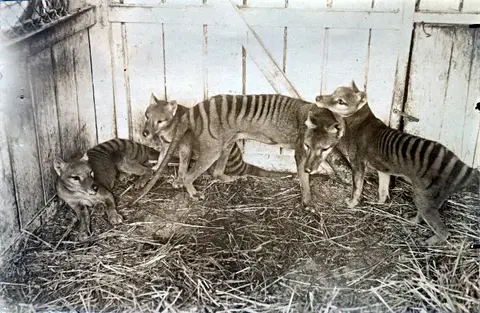
- Some reports may be of thylacines, which once lived on the mainland, or of misidentified dingoes and dogs.
- Lumholtz’s and Bennett’s tree-kangaroos, dark animals with long tails that live in the same rainforests, have been suggested as the source of some tree-climbing reports.
- The marsupial lion Thylacoleo is known only from fossils tens of thousands of years old; no remains suggest it survived into historical times.
Legend, culture and tourism
The Queensland tiger is part of north Queensland’s bush folklore, retold in local newspapers and in Australian mystery-animal books such as Malcolm Smith’s Bunyips & Bigfoots and Tony Healy and Paul Cropper’s Out of the Shadows. It sits alongside the thylacine and the “big cats” of the south in Australia’s long argument over mystery predators.
Places to visit
Rainforest park around Queensland’s highest peaks, including Mount Bellenden Ker, part of the Wet Tropics World Heritage Area.
Crater-lake rainforest park beside the road where several 20th-century sightings were reported.
Where it’s reported
Australia Queensland
Queensland tiger in the news
No recent headlines about the Queensland tiger. Our news desk checks every day — see all cryptid news.
Sources
- Carl Lumholtz, Among Cannibals (1889), Internet Archive
- The Express (Mareeba): Have you seen the FNQ marsupial tiger? (2020)
- Recently Extinct Species: Queensland thylacine sighting reports
- Scientific American, Tetrapod Zoology: Williams and Lang’s Australian Big Cats (Darren Naish)
- Wikipedia: Queensland tiger
First published · Updated