Field file · Reptilian · Folklore
Tarasque
Also known as La Tarasque, Tarasca (Spain)
The Rhône dragon of Provence, tamed by Saint Martha with holy water – its festival at Tarascon is a UNESCO-recognised living tradition.
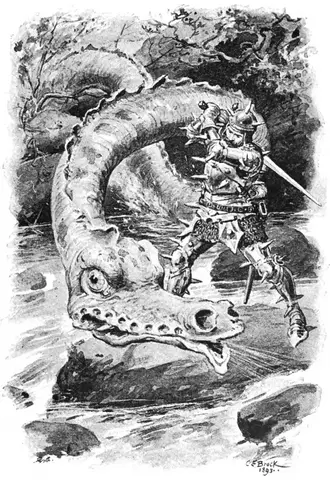
The Tarasque is a dragon-like monster of Provençal legend that is said to have lived in the Rhône near the town of Tarascon, sinking boats and devouring travellers. Medieval texts describe it as coming from Galatia and as a cross between a lion and a turtle-shelled beast, with six bear-clawed feet, a scaly serpent’s tail and poisonous breath.
According to the story, which belongs to the medieval Life of Saint Martha, the sister of Lazarus travelled to Provence after the Crucifixion and was asked by the villagers to help. She found the creature eating a man, sprinkled it with holy water, held up a cross and bound it with her girdle. It became docile, and the townspeople killed it with stones and spears. The text most often cited, a late twelfth-century Latin life, appears in several forms; the Golden Legend later made it famous.
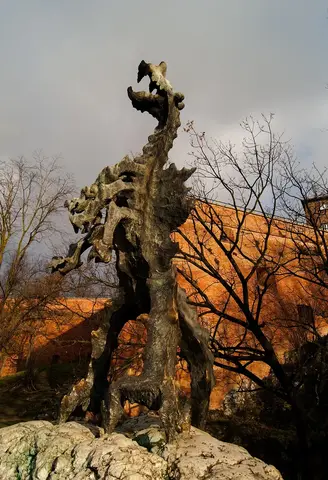
The monster became the emblem of Tarascon. Tradition credits King René of Anjou with organising a festival of the Tarasque in 1469, and with founding the Order of the Tarascaires in 1474. For centuries an effigy was carried through the streets by men hidden inside it, charging the crowd; the modern annual festival, held on the last weekend of June, dates from 1946 and includes the character Tartarin, from Alphonse Daudet’s novel. In 2005 UNESCO listed the Tarasque among the processional giants and dragons of Belgium and France.
Scholars have proposed pre-Christian roots, linking the legend to a Celtic stone beast found at Noves, but the evidence is debated. Similar processional dragons are found elsewhere, such as the Graoully of Metz and the Gargouille of Rouen, and a related figure, the Tarasca, appears in Spanish Corpus Christi processions.
What does Tarasque look like?
A heavy, scaly monster with a lion’s head, a turtle-like shell with plates, six legs ending in claws, a serpent’s tail and sulphurous breath; the festival effigy has a long tail and a hinged jaw.
Where is Tarasque seen?
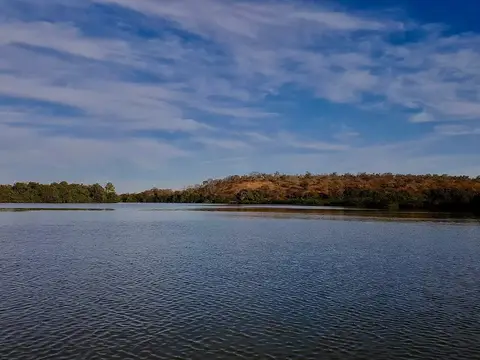
The banks of the Rhône at Tarascon and the forest and marsh nearby, according to the legend.
Tarasque sightings
- c. 1200Earliest texts Provence
The Latin Life of Saint Martha, usually dated between 1187 and 1212, records the taming of a dragon-like monster at Tarascon.
- 1469King René’s festivities Tarascon
According to tradition, King René of Anjou organised the first festival of the Tarasque. He founded the Order of the Tarascaires on 14 April 1474.
- 1787The Whit Monday ‘running’ Tarascon
Claude-François Achard described the effigy charging through crowds on Whit Monday, an event that often injured spectators.
- 1946Modern festival Tarascon
The annual festival was re-established and added the character of Tartarin of Tarascon.
- 2005UNESCO recognition Tarascon
UNESCO proclaimed the Tarasque festival, as part of processional giants and dragons of Belgium and France, a Masterpiece of Oral and Intangible Heritage.
Is Tarasque real? What could explain it
- The legend is a Christian dragon-slaying story used to explain conversion to Christianity in Provence and the flooding and dangers of the Rhône.
- Some scholars think the creature continues an older, pre-Christian water or fertility monster; others point to the iron-age ‘Tarasque of Noves’ stone statue as a possible influence.
- The scorpion tail and the crocodile-like early images show how artists changed the monster over time, and no real animal has ever been associated with it.
Legend, culture and tourism
The Tarasque is the central figure of Tarascon’s annual festival, with the effigy, the knights and traditional dances. It appears in sculpture at Tarascon, Arles and Montmajour, and was honoured in 1991 when a dinosaur was named Tarascosaurus.
Places to visit
The annual festival where the Tarasque effigy is paraded, held on the last weekend of June.
Where it’s reported
Sources
First published · Updated