FIELD FILE · ORANG-MAWASHOMINIDREGIONAL LEGEND
Orang Mawas
Also known as Mawas, Hantu jarang gigi (“snaggle-toothed ghost”), Johor Bigfoot, Orang dalam
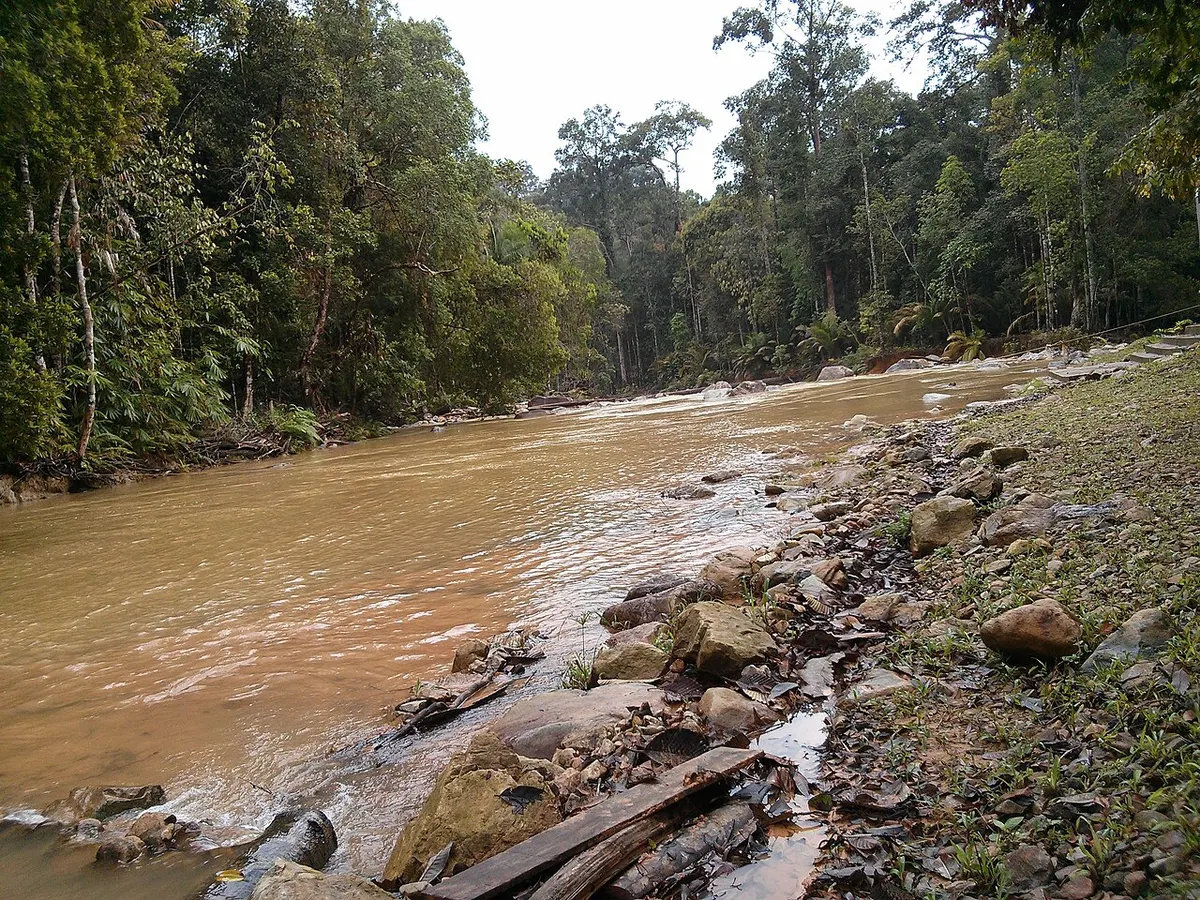
Malaysia’s “Bigfoot”: a towering, hairy forest giant of Johor whose reported 2005 sighting sparked an official state expedition in 2006.
The orang mawas – often just mawas, and nicknamed the “Johor Bigfoot” by the press – is a huge, hairy, upright creature said to live in the rainforests of southern Peninsular Malaysia, above all in Johor state and the Endau-Rompin forests on its border with Pahang. Orang Asli communities have their own name for it, hantu jarang gigi, often translated as the “snaggle-toothed” or “wide-gapped-teeth ghost”.
Stories of big hairy beings in the Malaysian jungle are old, but the mawas became national news in late 2005. Fish-farm workers clearing land near a forest reserve in southern Johor said they had seen three of the creatures – two adults and a youngster. Their employer photographed what appeared to be footprints up to 45 cm long, brown hair with a strong smell was reported nearby, and a broken branch was taken to suggest an animal about three metres tall.
What made the episode unusual was the official response. Johor’s national parks officials visited the site, an Orang Asli man came forward with his own encounter, a public hotline was opened for sightings, and in January 2006 Johor’s chief minister, Abdul Ghani Othman, announced a dedicated scientific expedition into likely areas, including Endau-Rompin National Park – stressing that the creatures must not be harmed or frightened. Johor’s national parks director suggested that what people saw might be the mawas, which he described as a primate.
Bigfoot fever peaked in April 2006 when a newspaper claimed wildlife officers had captured a young “Bigfoot” near Kota Tinggi – a report the Wildlife and National Parks Department flatly denied. Despite camera traps and searches, no evidence emerged, and some critics suggested the story had been talked up to bring tourists to Johor, which its supporters denied. The legend remains a favourite topic of Malaysian TV, YouTube and campfire talk.
- Type
- Hominid
- Status
- Regional legend
- First reported
- 2005
- Best-known location
- Endau-Rompin and the forests of Johor
- Also called
- Mawas, Hantu jarang gigi (“snaggle-toothed ghost”), Johor Bigfoot, Orang dalam
- Reported in
- Malaysia
What witnesses describe
Described as 2.4–3 m tall (some witnesses said up to 4 m), upright, heavily built and covered in black or brownish hair, with a strong odour. It is usually said to be shy and non-aggressive, and to feed on fruit and fish.
Where and when it’s seen
Lowland and hill rainforest in Johor and Pahang, especially Endau-Rompin National Park, the Kota Tinggi area and forest reserves near rivers and plantations. Reports come both from the forest edge and deep jungle.
Notable sightings
- November–December 2005The fish-farm workers’ sighting Forest reserve edge, southern Johor
Three workers said they saw a family of three huge, hairy creatures while clearing land for a fish pond. Footprints up to 45 cm long were photographed and the story made national headlines.
- December 30, 2005Park officials investigate Southern Johor
Johor National Parks director Hashim Yusoff surveyed the site and wildlife authorities discussed setting up camera traps, while the Malaysian Nature Society said many earlier sightings had gone unreported for fear of ridicule.
- January 2006An official expedition is announced Johor, Malaysia
Chief Minister Abdul Ghani Othman confirmed a dedicated expedition to search likely locations, including Endau-Rompin, and a hotline was opened for the public to report sightings.
- April 20, 2006The ‘baby Bigfoot’ denial Kota Tinggi, Johor
After Berita Harian reported that wildlife officers had darted and caught a young Bigfoot, the Wildlife and National Parks Department’s director-general said no such operation had taken place.
What could explain it?
- Sun bears, which often stand upright, and large primates are the usual suspects; ‘mawas’ is itself a word for the orangutan in parts of Sumatra.
- Footprints photographed in 2005 were described in the press as vague impressions in mud and leaves, and size estimates from broken branches are unreliable.
- Media excitement, a public hotline and a rumoured capture show how a single report can multiply into many; critics also suspected a tourism angle.
- Some writers link the mawas to Gigantopithecus, a giant ape known from fossils in China and Southeast Asia, but that animal is thought to have died out hundreds of thousands of years ago.
Legend, culture and tourism
The mawas belongs to Orang Asli forest lore and to Malay folk stories of the jungle, and since 2006 it has been firmly part of Malaysian popular culture – the subject of TV features, online documentaries and souvenir jokes in Johor. Endau-Rompin National Park, managed by Johor National Parks, still attracts visitors who ask guides about it.
Places to visit
The vast lowland rainforest at the centre of the 2006 search offers river trails, waterfalls and Orang Asli-guided treks.
Where it’s reported
Malaysia Johor Pahang
Orang Mawas in the news
No recent headlines about the Orang Mawas. Our news desk checks every day — see all cryptid news.
Sources
First published · Updated