FIELD FILE · BATUTUTHOMINIDREGIONAL LEGEND
Batutut (Người Rừng)
Also known as Người rừng (Vietnamese ‘forest people’), Ujit, Rock ape (Vietnam War slang), Kdghăt (Ê Đê)
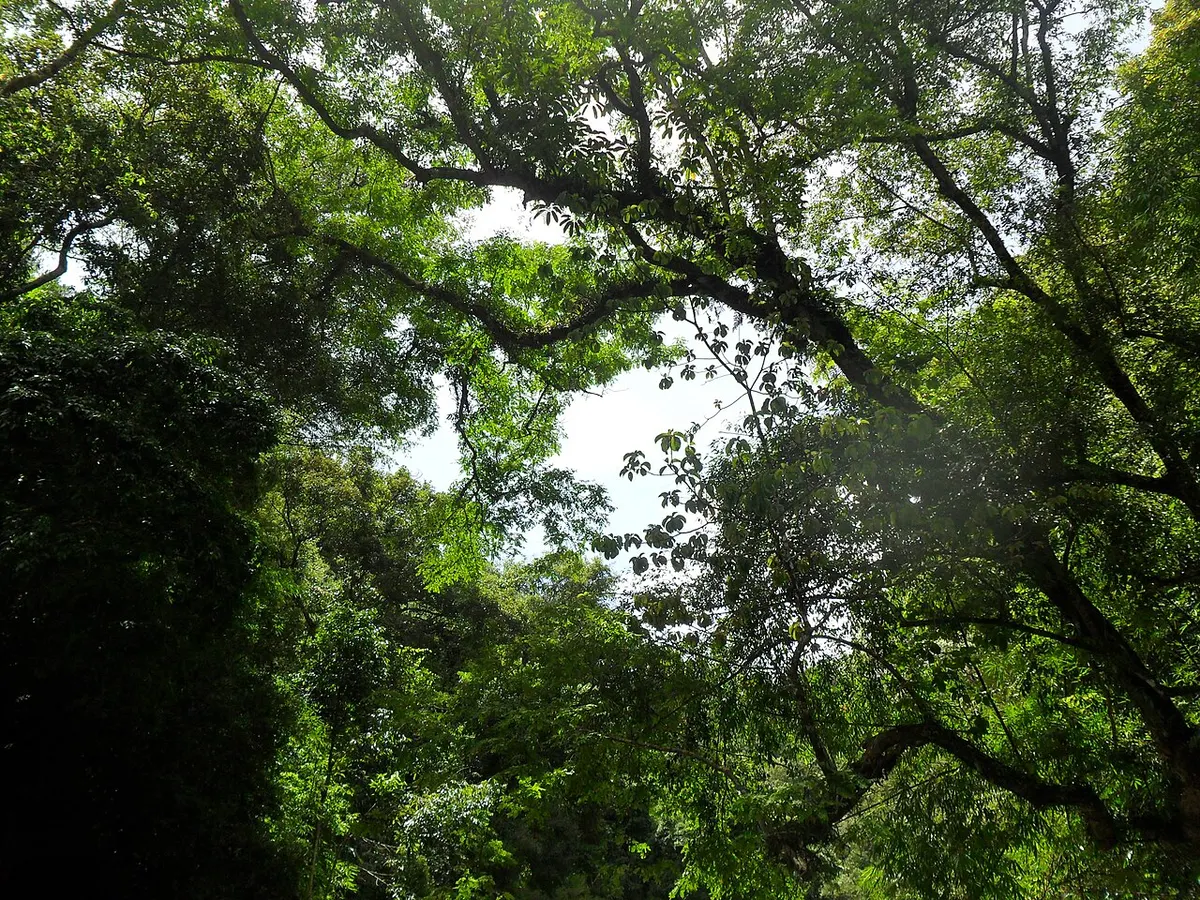
Vietnam’s “forest people” – upright, hairy wildmen reported by highland villagers, wartime soldiers and a state-backed search that began in 1974.
Người rừng – “forest people” – is the Vietnamese name for hairy, upright, human-like creatures that highland communities say live in the remote mountain forests of the Central Highlands and the Annamite (Trường Sơn) Range along the borders with Laos and Cambodia. In English-language cryptozoology the same creature is often called the batutut, a name also attached to similar reports from the forests of northern Borneo, and occasionally the ujit.
Legends of forest people in Vietnam are centuries old, and many highland peoples have their own names for them: kdghăt among the Ê Đê, jring among the Mnông, and others among the Jarai. Vietnamese researchers distinguish two reported forms – a tall “great wildman” up to about two metres, and a smaller one – which they say may overlap in Đắk Lắk.
The Vietnam War gave the legend a new audience. American, South Korean and Vietnamese soldiers deep in the jungle told stories of encounters with strange apes; US troops called them “rock apes”, and veteran Kregg P. J. Jorgenson later collected such accounts. Toward the end of the war, reports from soldiers on both sides prompted the North Vietnamese government to act: in 1974 it sent a research team including archaeologist Hoàng Xuân Chính and ornithologist Võ Quý into Gia Lai–Kon Tum and Đắk Lắk to investigate.
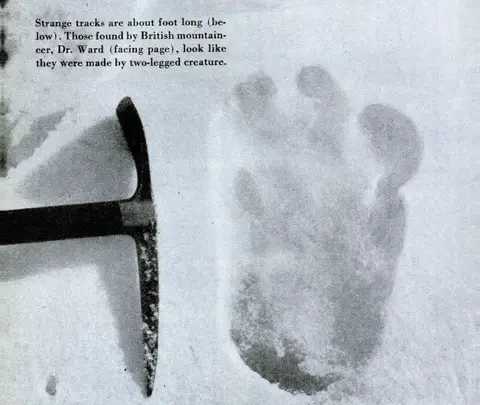
The most cited physical evidence came in April 1982, when a team led by biologist Trần Hồng Việt found a trackway on Mom Ray mountain in Sa Thầy district, Kon Tum, and cast a 29-cm footprint. That same year the government set aside 35,500 hectares of forest around Mom Ray partly to protect and study the creatures; the area later became Chư Mom Ray National Park. In 2021 Trần Hồng Việt and colleagues, with US anthropologist Jeff Meldrum, published a review of decades of fieldwork – while acknowledging that no conclusive proof had been found.
In Borneo, the name batutut is linked to human-like tracks that zoologist John MacKinnon reportedly found while studying orangutans in the late 1960s, which local people attributed to small forest men. Whether the Borneo and Vietnam reports describe the same thing – or anything at all – is unknown, but they share the setting of vast, little-explored rainforest.
- Type
- Hominid
- Status
- Regional legend
- First reported
- 1974
- Best-known location
- Central Highlands of Vietnam and the forests of northern Borneo
- Also called
- Người rừng (Vietnamese ‘forest people’), Ujit, Rock ape (Vietnam War slang), Kdghăt (Ê Đê)
What witnesses describe
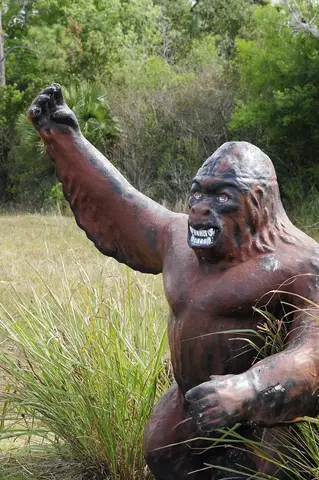
The ‘great wildman’ is described as 1.8–2 m tall, robust, covered in long red-brown to dark-brown hair except for a pinkish-grey face, with shoulder-length head hair and arms reaching the knees. It walks upright with a slight stoop. A smaller form, and the Borneo batutut, are said to be child-sized and to leave human-like footprints.
Where and when it’s seen
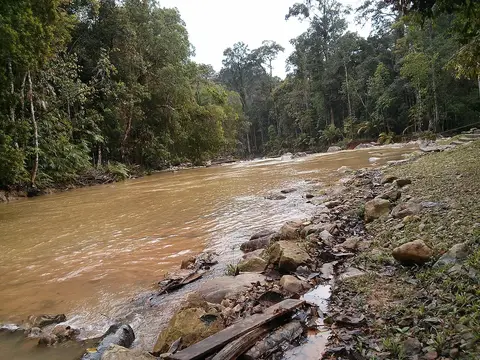
Remote montane rainforest of the Central Highlands and Annamite Range, especially around Mom Ray mountain in the former Kon Tum province, and lowland and hill forest in northern Borneo. Locals report encounters both by day and at night, usually of solitary animals.
Notable sightings
- 1960s–1970sThe ‘rock apes’ of the Vietnam War Central Highlands, South Vietnam
US troops on long-range patrols near the Laos and Cambodia borders described upright, ape-like creatures and stone-throwing ‘rock apes’. The stories were later gathered by veteran Kregg P. J. Jorgenson.
- 1974The government-sponsored search Gia Lai–Kon Tum and Đắk Lắk
Hanoi sent a scientific team including Hoàng Xuân Chính, Võ Quý and Lê Vũ Khôi to the highlands to gather testimony and evidence from local communities. Nothing conclusive was found.
- 1982A forest set aside for the wildman Mom Ray, Kon Tum
A government resolution designated 35,500 hectares of the Mom Ray forest for protection and further study of the creatures. In 2002 the area became Chư Mom Ray National Park.
- April 23, 1982Footprints on Mom Ray Ngọc Vin pass, Sa Thầy district, Kon Tum
Researchers found more than ten human-shaped footprints about 70 cm apart and cast the clearest, which measured 29 × 12 cm – larger than an average local person’s foot.
- 2021“Research on Wildmen in Vietnam” <em>The Relict Hominoid Inquiry</em>
Trần Hồng Việt, Trần Hồng Hải and Jeff Meldrum summarised ten expeditions totalling 432 days at 21 locations, concluding that evidence was suggestive but not conclusive.
What could explain it?
- Known primates of the Annamites – including macaques, gibbons and douc langurs – and sun bears, which can walk upright, are the obvious candidates for brief sightings; wartime ‘rock apes’ were most likely macaques.
- Orangutans lived in mainland Southeast Asia within the last few thousand years, so folk memories of large apes may persist in the region.
- Footprint casts are hard to authenticate; a single clear print can be produced by a barefoot human or distorted by mud and rain.
- Decades of fieldwork have produced testimony and tracks but no body, bones, clear photograph or DNA.
Legend, culture and tourism
The forest people are part of the oral traditions of the Central Highlands’ Indigenous peoples, and wartime ‘rock ape’ yarns are a minor genre of Vietnam veterans’ memoirs. In Vietnam the wildman is a recurring subject in newspapers and TV documentaries, and History Channel’s Beast Legends devoted an episode to it in 2010.
Places to visit
The park grew out of the 1982 decision to protect the Mom Ray forest where the wildman footprints were found.
Where it’s reported
Malaysia Vietnam Kon Tum (now Quảng Ngãi) Gia Lai Đắk Lắk Sabah
Batutut (Người Rừng) in the news
No recent headlines about the Batutut (Người Rừng). Our news desk checks every day — see all cryptid news.
Sources
First published · Updated