FIELD FILE · NAHUELITOLAKE & SEA MONSTERREGIONAL LEGEND
Nahuelito
Also known as El Nahuelito, Nahuel Huapi lake monster, Patagonian plesiosaur

Argentina’s own Nessie, a humped serpent said to swim glacial Nahuel Huapi Lake near Bariloche, sparking a famous 1922 “plesiosaur hunt.”
Nahuel Huapi is a deep, cold, glacier-carved lake in the Andean foothills of northern Patagonia, stretching for some 557 square kilometres and plunging to more than 400 metres. On its southern shore sits San Carlos de Bariloche, Argentina’s alpine resort town of chocolate shops and ski lifts – and the home port of the country’s most famous monster, affectionately called “El Nahuelito.”
Like Nessie, Nahuelito takes its name from its lake; nahuel is the Mapuche word for the jaguar. Early settlers heard from Indigenous neighbours about creatures in Patagonian lakes, though the best-known Mapuche water being, the flat, hide-like cuero, looks nothing like the long-necked monster of modern reports. From 1897 Clemente Onelli, later director of the Buenos Aires Zoo, collected scattered reports of strange animals in the southern lakes.
The modern legend crystallised in 1922. A gold prospector named Martin Sheffield wrote to Onelli describing huge tracks and a long-necked animal in a Patagonian lake, and George Garret, a company manager on Nahuel Huapi, went public about a creature he said he had seen in 1910. Onelli sent an expedition armed with elephant guns and dynamite, prompting protests from an animal-welfare society and coverage abroad; it found nothing. That same year, Bariloche businessman Primo Capraro paraded a plesiosaur float through the town’s carnival, a joke whose photograph helped fix the image of Nahuelito as a dinosaur.
Since then the creature has drifted between legend and local mascot. Photographs published by the Río Negro newspaper in 1988 and a string of viral videos from tourists and anglers since 2020 keep the story alive, while Bariloche’s tourism trade happily trades on it. No search has produced convincing evidence.
- Status
- Regional legend
- First reported
- 1910
- Best-known location
- Nahuel Huapi Lake, Bariloche, Patagonia
- Also called
- El Nahuelito, Nahuel Huapi lake monster, Patagonian plesiosaur
- Reported in
- Argentina
What witnesses describe
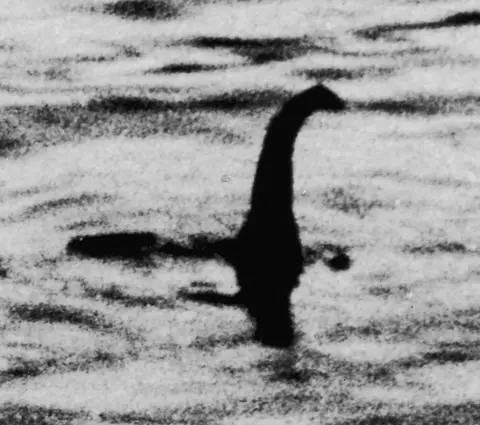
Most often a dark, leathery hump or two breaking the surface, sometimes with a long swan-like neck and small head – the classic plesiosaur image. Size estimates range from 5 to 15 metres. Other witnesses describe only fins or a powerful, unexplained wake.
Where and when it’s seen
The deep, cold waters of Nahuel Huapi Lake, including the arms near Bariloche, Puerto Pañuelo and Villa La Angostura. Reports cluster in the busy southern-hemisphere summer, December to March.
Notable sightings
- 1910George Garret’s sighting Nahuel Huapi Lake
Garret said he saw a creature about 400 metres away whose visible part was 5–7 metres long and stood around 2 metres above the water. He did not tell the story publicly until 1922.
- 1922The Buenos Aires Zoo’s plesiosaur expedition Northern Patagonia
Spurred by Martin Sheffield’s letter, zoo director Clemente Onelli sent a well-armed search party to the lakes. Protests from animal-welfare campaigners and international press attention followed, but the team returned empty-handed.
- 1922A plesiosaur at carnival Bariloche
Businessman Primo Capraro built a plesiosaur float for the town’s carnival parade – a prank that briefly sparked rumours the creature had been caught, and an early example of Nahuelito as a local mascot.
- 1988The anonymous photographs Near Bariloche
A magazine of the Río Negro newspaper published close-range photos of an object near the shore, sent by a man who did not give his name. He insisted it was neither a log nor a wave; the pictures were never independently verified.
- January 2020Anglers’ viral video Nahuel Huapi Lake
Two men fishing on the lake filmed a strange disturbance in the water, and one said he had seen fins. The clip spread widely on social media, where viewers argued over whether it showed a fish, a staged effect or Nahuelito.
What could explain it?
- Plesiosaurs died out about 66 million years ago, long before Patagonia’s glacial lakes formed, so a surviving marine reptile is not a realistic option.
- Floating logs and tangled branches, common on a forested lake, can look like humps or a raised neck, especially in waves.
- Large introduced trout and salmon, swimming deer or other mammals, and boat wakes can create the disturbances seen in videos.
- The Mapuche cuero tradition and the Nessie craze of the 1930s gave a template that later observers fitted to what they saw.
- Tourism has an interest in keeping the legend lively, as the 1922 carnival float showed.
Legend, culture and tourism
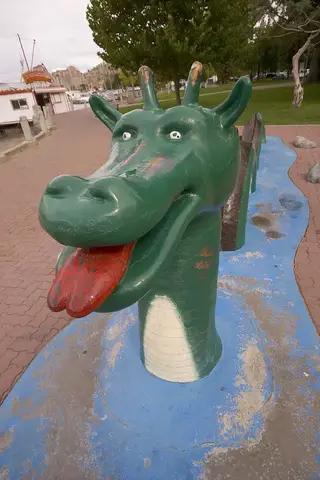
Nahuelito is part of Bariloche’s identity, turning up on souvenirs and in cheerful local news stories every time a new video surfaces, and it is often named as Argentina’s most representative mythical creature. The lake lies inside Nahuel Huapi National Park, which grew out of the Parque Nacional del Sud of 1922 – Argentina’s first national park.
Places to visit
Argentina’s first national park surrounds the lake; boat trips from Puerto Pañuelo cross the deep water where most reports come from.
Where it’s reported
Argentina Río Negro Neuquén Chubut
Nahuelito in the news
No recent headlines about the Nahuelito. Our news desk checks every day — see all cryptid news.
Sources
- Wikipedia (Spanish): Nahuelito
- Wikipedia: Nahuelito
- Diario Río Negro: Nahuelito, la criatura mitológica más representativa del país
- LM Neuquén: Un grupo de turistas filmó al Nahuelito
- Canal 26: ¿Apareció Nahuelito? Video muestra extraña presencia en lago Nahuel Huapi (January 2020)
- Argentina.gob.ar: Parque Nacional Nahuel Huapi
First published · Updated