Field file · Hominid · Folklore
Basajaun
Also known as Lord of the Forest, Basajaunak (plural), Basandere (female)
The Basque ‘Lord of the Forest’, a hairy giant who guards flocks from storms and wolves and, in myth, taught people farming, milling and smithing.
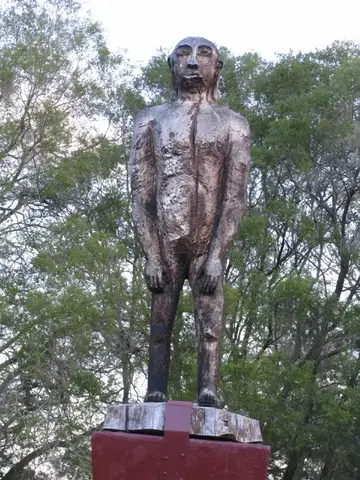
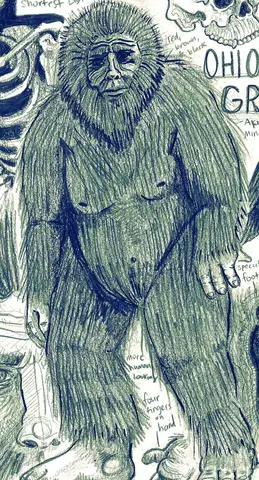
Basajaun, meaning “lord of the forest,” is a huge, hairy, human-like being in Basque mythology. In tradition he lives in the deepest woods and in caves in high places, with a mane of hair reaching his knees and covering his face and chest, and is said to be very strong and agile. A female counterpart, Basandere, appears in some tales.
He is mainly known as a protector of livestock. Shepherds told how Basajaun would shout and whistle to warn them of approaching storms so they could bring in their sheep, and how he would lurk around the folds to keep off the wolves. Sheep were said to shake and ring their bells when he was near. In return, people left him a piece of bread.
Another set of tales makes him a culture-bringer: the first farmer, miller and smith, whose secrets, the saw, the mill axle and the welding of metals, were stolen from him by humans through cunning. The tales are collected in the work of the Basque ethnographer José Miguel de Barandiarán, including Eusko-Mitologia, and in nineteenth-century collections by Chaho, Cerquand, Webster and Vinson.
Basajaun is associated with the forests of Gorbea in Biscay, Ataun in Gipuzkoa and Irati in Navarre, with related figures in the Aragonese Pyrenean valleys. Some authors have suggested that the myth preserves a folk memory of early contact with Neanderthals in Iberia, but this is a speculation, not established fact.
What does Basajaun look like?
A tall, strong, hairy man-like giant with a long mane hanging to his knees; in some tales one foot is round, like a stump, and leaves circular prints.
Where is Basajaun seen?
Deep beech and oak forests, caves and high pastures of the western Pyrenees and Basque mountains, especially around storms.
Basajaun sightings
- 1875–82Cerquand’s collection Basque Country (French side)
Jean-François Cerquand published Basque legends that included Basajaun stories, among the early written sources.
- 1922Barandiarán’s Eusko-Mitologia Basque Country
José Miguel de Barandiarán’s study of Basque mythology, a key source on the figure, was first published.
Is Basajaun real? What could explain it
- Folklorists compare Basajaun with the European wild man and woodland spirits such as the Roman Silvanus, as a personification of the forest and of the dangers of lonely mountains.
- The Neanderthal ‘folk memory’ idea is an academic speculation: Neanderthals disappeared tens of thousands of years ago and no scholarly consensus supports an oral memory lasting that long.
- Storm-warning shouts and wolf alarms in the mountains may have been explained by the figure, in the same way that echoes and wind were.
Legend, culture and tourism
Basajaun is a major figure of Basque culture and appears in Basque books, art and mountain lore. He is treated as part of Basque heritage and identity, and his tales are still told in the Pyrenees.
Where it’s reported
Sources
First published · Updated