Field file · Dogman & canine · Folklore
Barghest
Also known as Barguest, Padfoot (related), Bargest
A huge shaggy black dog of northern English folklore with saucer eyes, an omen of death said to haunt Troller’s Gill, York and Whitby.
The Barghest, or Barguest, is a spectral black dog of northern England, reported from Yorkshire and across Durham and Northumberland. In its most familiar form it is a large, long-haired hound with eyes the size of saucers, sharp teeth and claws, sometimes accompanied by the rattle of chains. It can also take the shape of a headless man or lady, a white cat, a rabbit or a calf. In places the word means a household goblin or ghost.
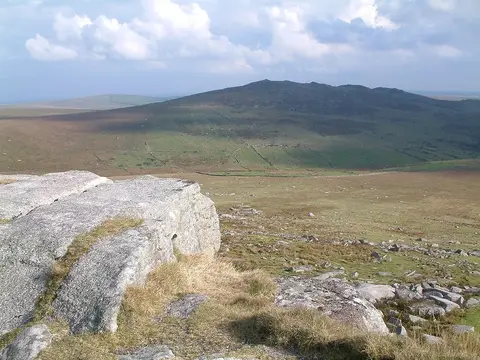
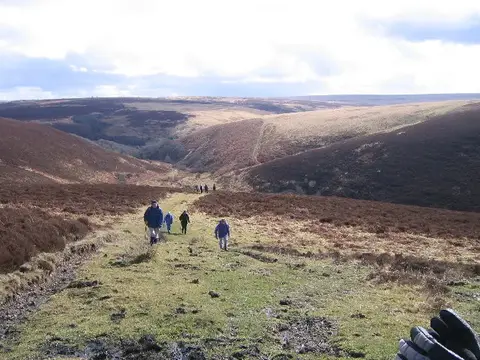
Its most famous haunt is Troller’s Gill, a narrow, wooded limestone gorge close to Appletreewick in the Yorkshire Dales. A ballad, “The Legend of Troller’s Gill,” printed in William Hone’s Every-Day Book in 1830, tells of a man who spent a night there to meet the creature. In the poem, his ritual magic fails, and at dawn a shepherd found him dead, torn by marks no human hand could have made. Other Barghests are said to prowl York’s medieval lanes, Whitby and wasteland near Leeds.
The Barghest is usually an omen of death. When an important person is about to die, it was said to appear followed by the district’s dogs in a howling procession, and anyone who blocked its path might receive a wound that never healed. William Henderson’s Notes on the Folk-Lore of the Northern Counties (1879) records many Durham versions. The name’s origin is uncertain; suggested sources include burh-ghest, “town ghost,” or German Berg-geist, “mountain spirit.”
The legend is often named among the folk sources of the black-dog tradition that fed Arthur Conan Doyle’s The Hound of the Baskervilles (1901), though Doyle himself credited a Dartmoor story told by his friend Bertram Fletcher Robinson.
What does Barghest look like?
A massive, shaggy, usually black dog with huge glowing or saucer-sized eyes, big teeth and claws; also described as headless, as a white cat or as rattling chains and padding footsteps.
Where is Barghest seen?
Lonely lanes, gorges, bridges and town alleys in Yorkshire, Durham and Northumberland, especially Troller’s Gill near Appletreewick, York’s Snickelways and Whitby.
Barghest sightings
- 1830The Troller’s Gill ballad Troller’s Gill, Yorkshire
William Hone’s Every-Day Book printed “The Legend of Troller’s Gill,” the poem that fixed the gorge’s association with the Barguest.
- 1879Folk-Lore of the Northern Counties County Durham
William Henderson’s collection recorded Durham versions of the Barghest, including accounts of it as a shapeshifting spectre.
Is Barghest real? What could explain it
- Black-dog legends are widespread in Britain and may have grown from fear of dark lanes, stray or large dogs, and the symbolism of dogs as guides of the dead.
- The omen-of-death role fits long-standing ideas of dogs howling before a death.
- The Troller’s Gill story is a literary ballad and the death in the poem is best regarded as a story rather than a recorded event.
- Some scholars link the names ‘barghest’ and ‘guest’ (dialect for ghost), suggesting the creature was originally a general ghost that later took a dog shape.
Legend, culture and tourism
The Barghest inspires pub names, ghost walks and the name of a building on York’s Shambles. Barghest-like dogs appear in children’s fiction, role-playing games and video games, and the black-dog tradition lies behind Gytrash and Padfoot stories elsewhere in England.
Places to visit
A narrow limestone gorge with abandoned lead-mine shafts, reached on foot, and best avoided after heavy rain.
Where it’s reported
Sources
First published · Updated