FIELD REPORT · HIMALAYA · 75TH ANNIVERSARY
Yeti Footprints at 75: What Shipton’s 1951 Photographs Still Show
In November 1951 an Everest expedition photographed tracks on the Menlung Glacier. Seventy-five years on: the doubts, a hoax claim and the DNA tests.
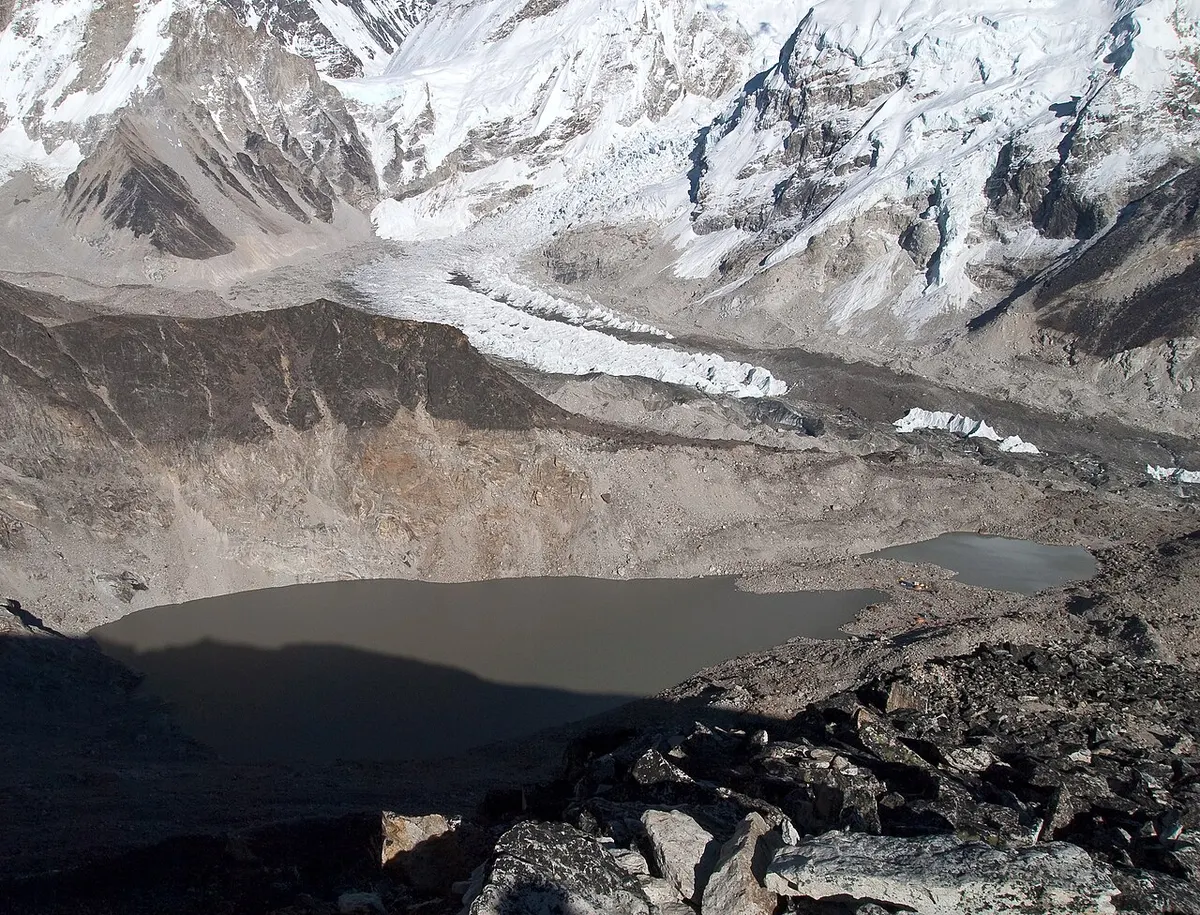
This month marks 75 years since the best-known yeti image: a close-up of a single footprint, an ice axe beside it for scale, photographed by the mountaineer Eric Shipton in the snow of the Menlung Glacier in November 1951. Shipton’s photographs ran in The Times that December and shaped how the world imagined the “Abominable Snowman.” Their history is more tangled than the legend suggests, and the argument over them has run for decades.
The find
Shipton was leading the 1951 Everest reconnaissance, which got as far as the top of the Khumbu Icefall, where a huge crevasse blocked the route into the Western Cwm. According to the mountaineering writer Peter Gillman, in the 2001 Alpine Journal, Shipton then led a lightweight side trip into the Menlung region, about 30 miles west of Everest. On the afternoon of November 9, Shipton, Michael Ward and Sherpa Sen Tenzing crossed the Menlung La at 19,960 feet and started down the glacier. Half an hour later they came upon tracks in the snow.
We followed the tracks for more than a mile down the glacier before we got on to moraine-covered ice.
Eric Shipton, in The Times, December 1951, as quoted by Peter Gillman in the Alpine Journal (2001)
Shipton wrote that most of the tracks had melted into oval shapes, but that in places a well-preserved print showed three “toes” and a broad “thumb.” Gillman counts four photographs: a pair of long shots of the trail, Ward appearing in one of them, and a pair of close-ups of one print, dominated by a large big toe, with an ice axe or Ward’s boot for scale. The prints were estimated at about 12 by 6 inches. The Times ran three of the pictures under the headline “Footprints of the ‘Abominable Snowman.’”
Excitement, then doubts
Zoologists and anthropologists were excited by the print, Gillman writes, because it showed features not seen in any known animal of its size: a concave ball of the foot and an enormous big toe set apart from much smaller toes. The Belgian zoologist Bernard Heuvelmans suggested a cross between an ape and a bear. According to Gillman, the Natural History Museum, which mounted an exhibition of the pictures, decided a langur monkey could have left the tracks.
Skeptics later spotted a problem. Edmund Hillary, who was on the reconnaissance, noticed that the single print looked fresh while the line of tracks was blurred, which Gillman puts down to thawing and refreezing. The primate scientist John Napier raised the same difference, and Ward then proposed that there had been two separate sets of tracks. Shipton backed him, agreeing with Napier that the long-shot tracks were probably made by a goat. Gillman points out that this contradicted earlier accounts. Shipton’s Times report and his books described one set, and so did Bill Murray’s diary, which on November 11 recorded “a long line of spoor along the line of Eric and Michael’s track.”
A hoax claim, and its rebuttals
In 1989 Gillman and Audrey Salkeld argued in the Sunday Times Magazine that Shipton had embellished one of the oval prints. They noted that the uncropped ice-axe photograph shows the top of a second print with only vague toes. Hillary told Gillman that Shipton “might have tidied it up,” though Murray said he thought it inconceivable that Shipton would have kept up such a joke. Shipton’s biographer Peter Steele rejected the charge, and in 1999 Ward proposed, among other ideas, that a local Tibetan with deformed feet might have walked the glacier. Gillman called that fanciful, and in 2001 wrote that he still believed the print was a hoax. That is Gillman’s argument, and Ward and Steele dispute it.
What DNA has said since
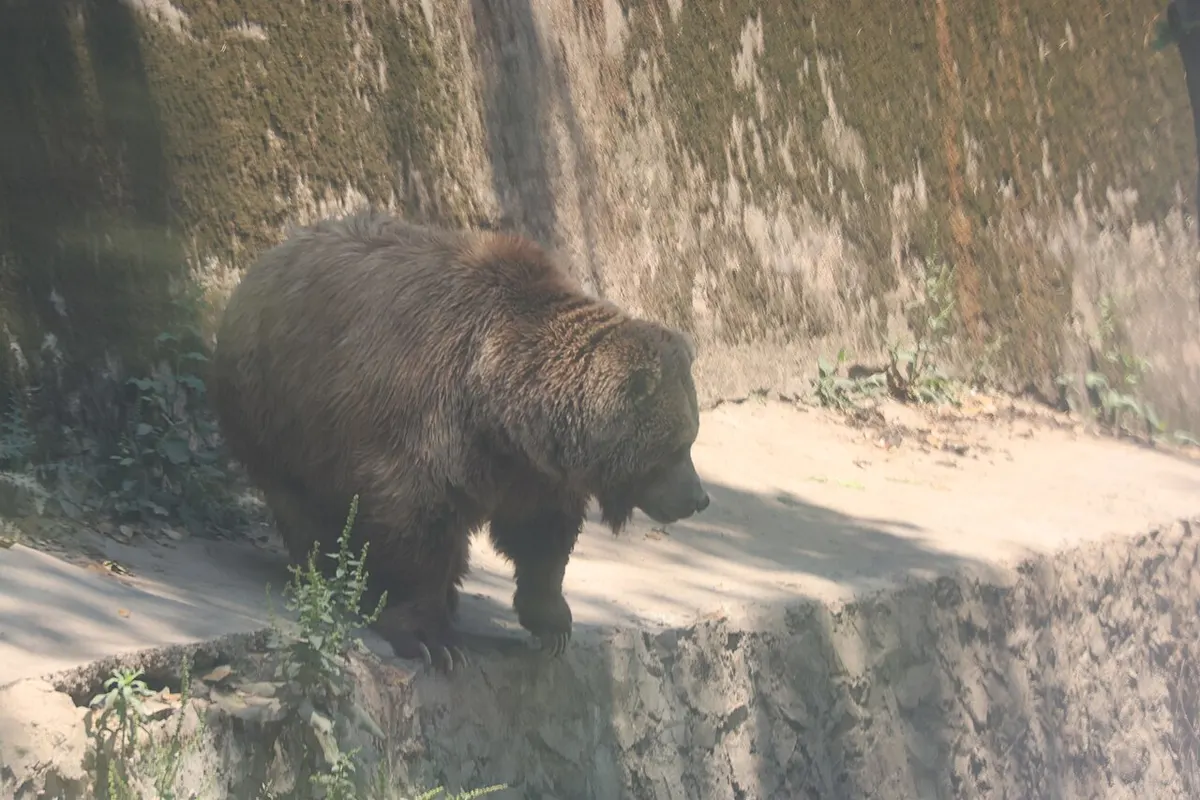
The tracks left no physical remains, so later science has tested other “yeti” material. In 2017 a team led by Charlotte Lindqvist of the University at Buffalo analyzed nine purported yeti samples, including bone, tooth, skin, hair and feces from the Himalayas and Tibetan Plateau, in Proceedings of the Royal Society B. One came from a dog, and the rest came from bears, six Tibetan brown bears, one Himalayan brown bear and one Asian black bear. Lindqvist told National Geographic she grew “a little bit suspicious” of a 2014 Oxford study that linked two yeti fur samples to ancient polar bear DNA; her team analyzed longer DNA sequences, which she said gives more robust results.
Our findings strongly suggest that the biological underpinnings of the yeti legend can be found in local bears.
Charlotte Lindqvist, quoted by the University at Buffalo, November 29, 2017
Ross Barnett, an ancient-DNA researcher at Durham University, told National Geographic that the legend would likely survive: “You can’t debunk a myth with anything as mundane as facts.” The DNA work addresses relics and hair, not the 1951 footprints, which survive only as photographs and are still argued over.
The photograph remains the yeti’s defining image. Read the Yeti entry for the wider legend, and the pages for Nepal and China for the range.