FIELD REPORT · NATIONAL
A $1 Million Bigfoot Bounty: Why Prizes for Proof Never Get Paid
Hard Mountain Dew’s $1 million Bigfoot Bounty runs to Nov. 30, but its own rules say the top prize won’t be paid. A history of bounties nobody collected.
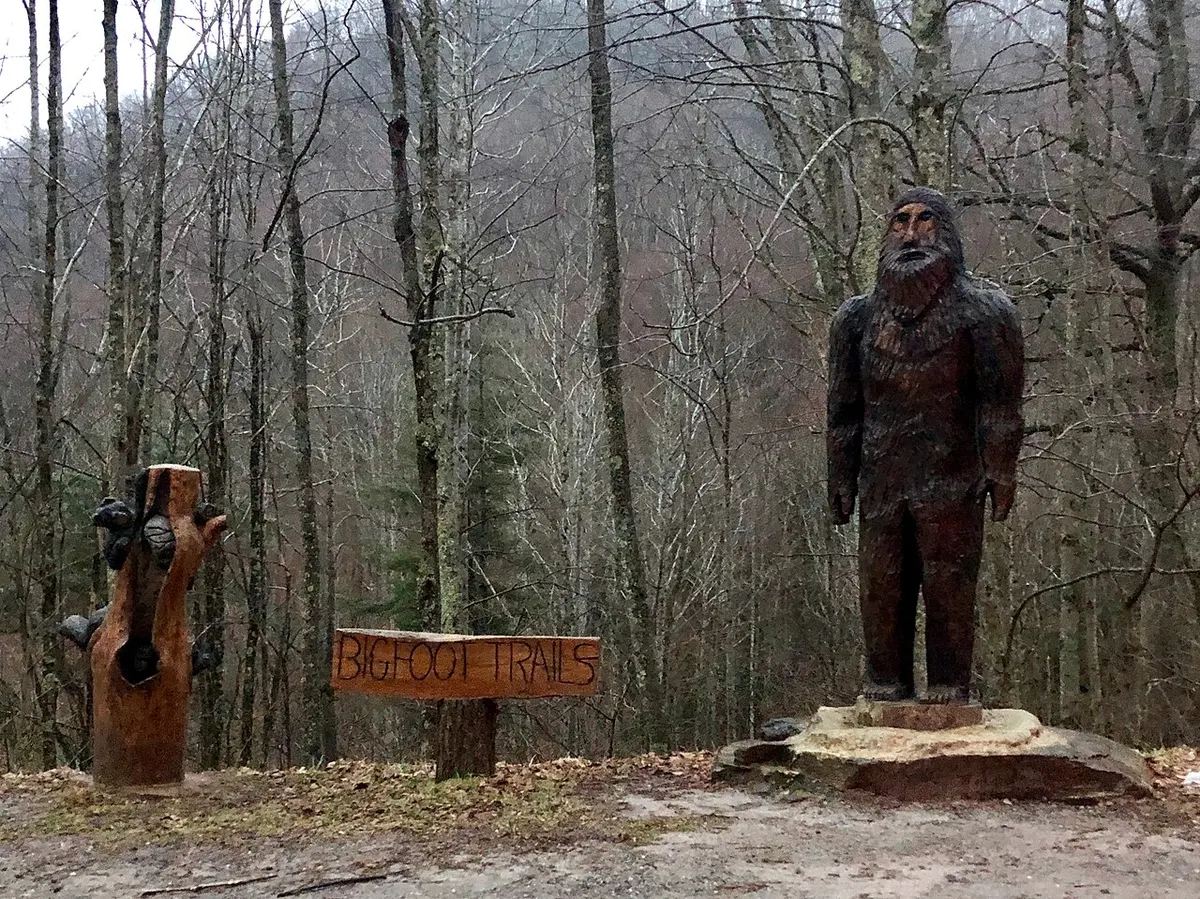
This fall, one of the most widely covered Bigfoot stories in America is not a sighting but a contest. On September 16, Hard Mountain Dew – the alcoholic spin-off of the soda, launched in 2022 by Boston Beer Company in partnership with PepsiCo – opened what it calls the “Bigfoot Bounty,” advertising $1 million to the first person who can prove the creature exists. Entries close November 30.
It is a marketing campaign, and the fine print says so plainly. The contest’s official rules describe the $1 million grand prize as “satirical,” state that it is “not available to be won” and that no grand prize will be awarded. That makes it an unusually honest entry in a long line of cash prizes for cryptid proof – prizes that share a common history: the money stays in the bank.
What counts as ‘proof’
According to the official rules, legal U.S. residents 21 and older can enter at the contest website from September 16 through 11:59 p.m. Eastern on November 30; employees of the companies involved and their families are excluded. A photo, video or audio entry must include at least four of seven kinds of evidence, which the brand says were drawn up with Bryce Johnson, a Bigfoot researcher who produced and starred in the television series Expedition Bigfoot. Entrants can also submit a written account of an encounter of up to 400 words, and AI-generated or AI-altered material is barred.
The categories in the rules are oddly specific: a footprint 37 to 38.5 inches long, sunk six inches deep into solid gravel; a 13-inch handprint; night-vision thermal footage of a heat signature seven to nine feet tall moving at 20 to 25 mph through dense forest; a tuft of hair snagged five to ten feet up a branch and containing “unknown DNA markers”; audio recordings; “environmental remnants”; and a “Bigfoot cameo” photo of the creature photobombing the entrant. What can actually be won is far smaller: 100 first prizes of up to $20 each, roughly the price of a 12-pack, with winners to be picked in a random drawing around December 1.
Whether you catch Bigfoot or just catch a good story trying, there’s nothing better than an ice-cold Hard Mountain Dew at the end of the hunt.
Erica Taylor, senior brand director for Hard Mountain Dew, in a statement quoted by Fox Business (Sept. 21, 2026)
Taylor framed the contest around “bold experiences,” noting that every fall someone has “a story of a shape in the trees or a sound they can’t explain.”
The critics
Not everyone in the cryptid world is charmed. Sharon Hill, a science writer who tracks the field on her Modern Cryptozoology site, called the bounty “a gimmick” to sell a drink, and argued that the rules have “holes large enough for a guy in a gorilla suit to skip through,” since prints, handprints and audio are easy to fake. Her deeper point is about verification: there are no agreed standards for Bigfoot evidence, she wrote, “because we have no Bigfoot.” She also asked who would pay to test hair samples to rule out “a bear, horse or cow,” and questioned whether a podcast or TV career makes someone an expert judge.
Hill’s bottom line is the standard scientific one: solid proof would mean a body or body part handed to scientists. Footprints, blurry images and recordings can be suggestive, but a new species is normally established from a physical specimen that independent labs can examine. The contest asks for a checklist of evidence types, not a body – and under its own rules, the $20 prizes are the only money on the table.
A short history of unpaid bounties
Big-money Bigfoot prizes are not new. In early 2014 the cable network Spike aired 10 Million Dollar Bigfoot Bounty, hosted by actor Dean Cain with scientists Todd Disotell and Natalia Reagan. Teams of hunters competed across eight episodes; the $10 million required evidence that would “stand up to scientific testing.” Nobody came close. Recapping the finale on the Skeptoid blog in February 2014, Alison Hudson tallied the unambiguous evidence found as “none”: the hair, scat and DNA samples turned out to be worthless or came from known wildlife. The winning team took home a $100,000 consolation “research grant.”
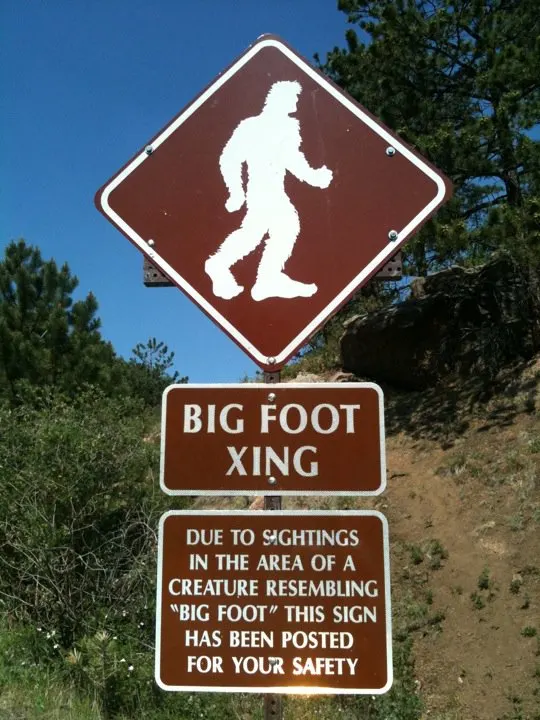
In early 2021, an Oklahoma state lawmaker, Rep. Justin Humphrey, filed a bill seeking a Bigfoot hunting season and floated a $25,000 bounty for capturing the creature alive and unharmed. According to KOKH, as reported in March 2021, talk of the bounty quickly grew to nearly $2.1 million as state tourism officials planned license plates, decals, commemorative tracking licenses and “Bigfoot checkout stations.” Humphrey said the goal was to bring in tourists with “safe, affordable fun.” We found no report of anyone collecting.
The pattern holds for the Pedro Mountain mummy, too: a $10,000 reward for that Wyoming curiosity, offered in 2005, can no longer be claimed now that its sponsor has died, as we reported.
Who the bounty is really for
The people most likely to take Bigfoot evidence seriously may be the least impressed. Cardiff University researcher Jamie Lewis and Sheffield social scientist Andrew Bartlett interviewed more than 150 people – committed “Bigfooters,” TV personalities and skeptics among them – for their book Bigfooters and Scientific Inquiry. As Popular Science summarized their work in 2025, Lewis describes hunters searching for “the merest traces, remnants and residues” with thermal cameras, audio rigs and drones, and most do not treat every big footprint as proof. A contest that rewards a checklist of fakeable items sits awkwardly with that slower, more cautious culture.
None of this means the bounty is harmful; it may send a few people out into the autumn woods with cameras. But the outcome is not in doubt. The rules already rule out a $1 million payout, and even an honest offer would face the same obstacle that left every earlier prize unpaid: no one has yet produced the body, bones or verifiable DNA that would settle the question. Until someone does, Bigfoot remains a claim – and a very good marketing mascot.
Sources
- Hard Mountain Dew Bigfoot Bounty: Official Rules (Green Rebel Brewing Company, 2026)
- MediaPost Marketing Daily: Hard Mountain Dew Offers $1M For Real Bigfoot Proof (Teresa Buyikian, Sept. 18, 2026)
- Fox Business: Hard Mountain Dew will pay $1M if you can prove Bigfoot exists (Sophia Compton, Sept. 21, 2026)
- Modern Cryptozoology: Get ready to submit your best Bigfoot fakery to win $1 million (Sharon Hill, Sept. 19, 2026)
- Beverage Industry: Boston Beer announces launch of HARD MTN DEW (Feb. 22, 2022)
- Skeptoid blog: Bigfoot Bounty Finale – The End of the Whole Mess (Alison Hudson, Feb. 17, 2014)
- Wikipedia: 10 Million Dollar Bigfoot Bounty
- KATV / KOKH: Oklahoma Bigfoot bounty grows to more than $2 million (Kevin Severin, March 4, 2021)
- ABC7 News: Oklahoma state representative files bill to create a ‘Bigfoot’ hunting season (Jan. 21, 2021)
- Popular Science: What Bigfoot hunters get right (and very wrong) (Andrew Paul, Nov. 24, 2025)