FIELD REPORT · WYOMING
Wyoming’s Lost Pedro Mummy: A $10,000 Reward Dies With Its Sponsor
A New York creationist’s 2005 bounty for Wyoming’s missing ‘little mummy’ will never be paid. What Pedro was, where it went and why the search stalled.
For two decades, anyone who could lay hands on Wyoming’s most famous oddity had a standing offer of $10,000. That offer is now over. In an August 16 story, Cowboy State Daily reported that John Adolfi, the New York creationist who put up the reward for the Pedro Mountain mummy in 2005, died last November – and with him, any chance that the money will ever be claimed.
The news closes a strange chapter in a strange story: a tiny seated body found by gold prospectors in the 1930s, sold and resold as a sideshow “pygmy,” identified by scientists as a human infant, and then lost track of around 1950. Pedro has not been publicly seen since.
A ledge, a blast and a seven-inch figure
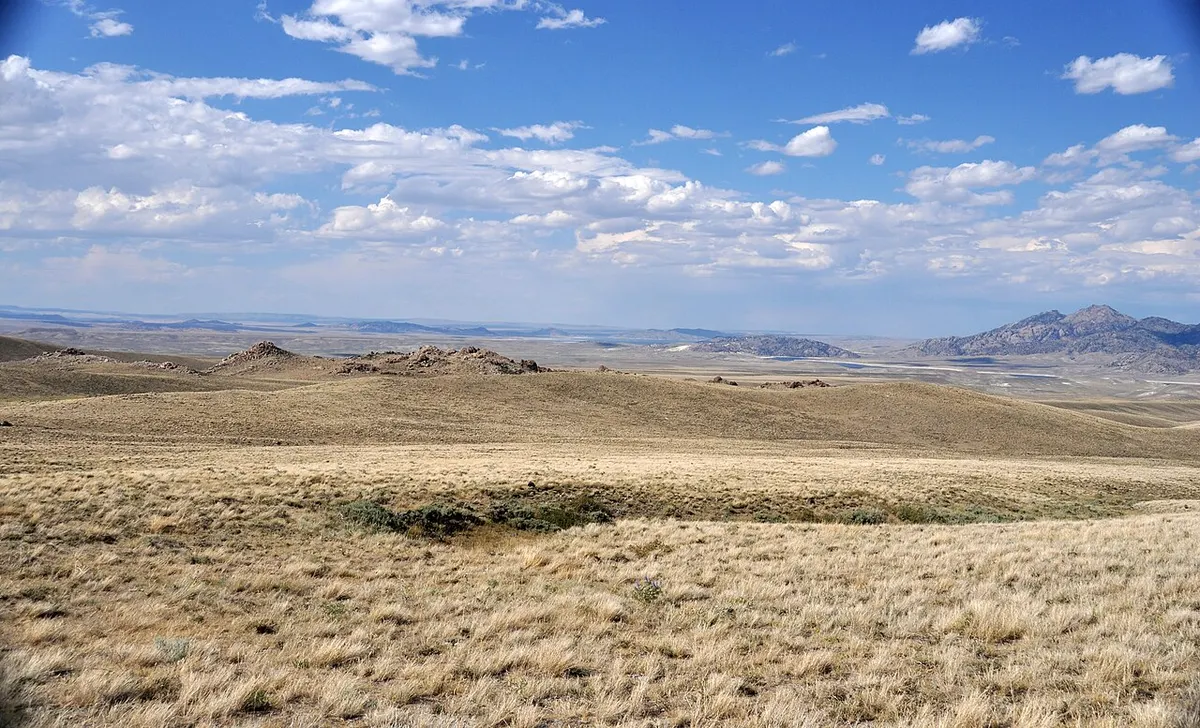
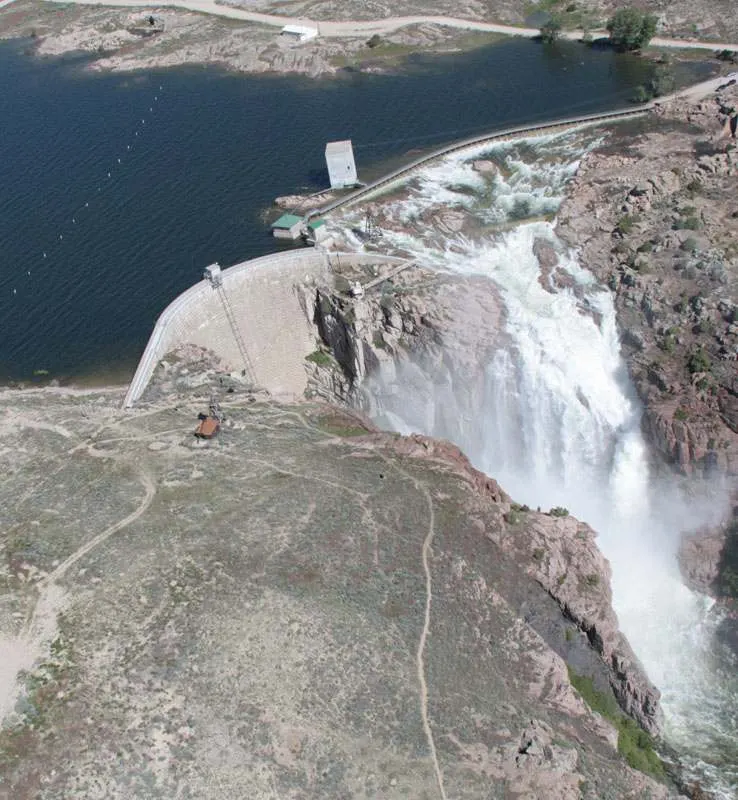
According to the Oct. 21, 1932, Casper Tribune-Herald, as cited by Cowboy State Daily, prospectors Cecil Main and Frank Carr used explosives to open a cave in the Pedro Mountains near Pathfinder Reservoir, southwest of Casper. Inside, they said, they found a small figure seated alone on a ledge, legs tucked under and arms crossed. Seated, it stood roughly six to seven inches tall and weighed about a pound. The date itself is shaky: newspaper accounts point to 1932, while Main later signed an affidavit placing the find in June 1934, and Cowboy State Daily has described the timeline as unreliable.
What followed was a long career as a curiosity. The prospectors reportedly sold the mummy for $25. It was shown at sideshows and spent several years in Jones Drug Store in Meeteetse, then was bought for several thousand dollars by Casper car dealer Ivan Goodman, a showman who displayed it at his dealership. Newspapers linked it to the Nimerigar, small, fierce people of Shoshone tradition – a connection made by outsiders that says nothing either way about that living tradition.
What the scientists found
Goodman took the mummy east for examination. In the late 1940s, Harry Shapiro of the American Museum of Natural History studied it and its X-rays and concluded it was genuine, not a fake; in 1950, Paul Martin of Chicago’s Field Museum examined it as well. Their conclusion, as summarized by Cowboy State Daily and Wikipedia, was that Pedro was most likely a stillborn or newborn human infant with anencephaly, a birth defect in which the brain and skull do not fully form – which can give a tiny body an oddly adult-looking face and flattened head. Earlier press claims, such as a 1941 report that X-rays showed a 65-year-old man with raw meat in his stomach, were never borne out by the scientists who examined the body.
Decades later, University of Wyoming anthropologist George Gill reviewed the surviving X-rays and agreed with that diagnosis; Cowboy State Daily’s 2026 story says he regards Pedro as definitely an anencephalic infant. A second small mummy, nicknamed Chiquita, surfaced after a 1994 episode of Unsolved Mysteries featured Pedro. According to Wikipedia’s summary of the case, X-ray and DNA work on Chiquita identified it as an anencephalic Native American infant, dated to centuries ago. Gill has said that such infants “were handled in a special way,” according to Cowboy State Daily’s 2023 account of the case.
Anencephalic infants often look like little adults.
University of Wyoming anthropologist George Gill, quoted by Cowboy State Daily (June 17, 2023)
Where did it go?
Goodman died in 1950. A 1979 Casper Star-Tribune story, cited by Cowboy State Daily, said a man named Leonard Wadler took the mummy to Florida; Adolfi’s research indicated Wadler died there in the 1980s. Main once said the mummy went to the Field Museum, but there is no record of it ever being displayed there. The original X-rays are also lost.
Adolfi, who also hunted for Noah’s Ark and evidence of giants, founded the Lost World Museum, a creationist museum in Phoenix, New York, and ran a YouTube channel under its name. He wanted Pedro for DNA testing, MRI scans and modern X-rays that he hoped would challenge evolution, Cowboy State Daily reported. He chased several leads – a woman who said a tribe outside Wyoming held the mummy, a claimed sighting at a New Jersey garage sale – and found them all to be dead ends. Many people tried to claim the money, the paper said, but none passed his “truthfulness test.”
The skeptical bottom line
Pedro is not really a mystery about what it was; the scientists who examined it agreed it was a human infant, and modern tests on a similar mummy support that view. The open questions are historical: exactly when it was found, who owns it now and whether it still exists. If it ever turns up, the right home would likely involve consultation with tribal nations, not a reward check – an infant’s remains, not a cryptid specimen. Until then, the unclaimed $10,000 stands as another example of a bounty for extraordinary evidence that nobody collected.
Sources
- Cowboy State Daily: Nobody Will Ever Claim $10K Reward For Wyoming’s Missing Pedro Mountain Mummy (Kerry Drake, Aug. 16, 2026)
- Cowboy State Daily: The Tall, But True, Tale Of A Little Mummy Discovered In Wyoming (Jake Nichols, June 17, 2023)
- Wikipedia: San Pedro Mountains mummy
- Wikipedia: Lost World Museum