FIELD REPORT · WASHINGTON
A Boulder, a Jogger and a Figure on the Wind River Highway
A driver says she saw a reddish-brown upright figure above a fresh rockslide near Carson, Washington, in May. What the report shows – and what it can’t.
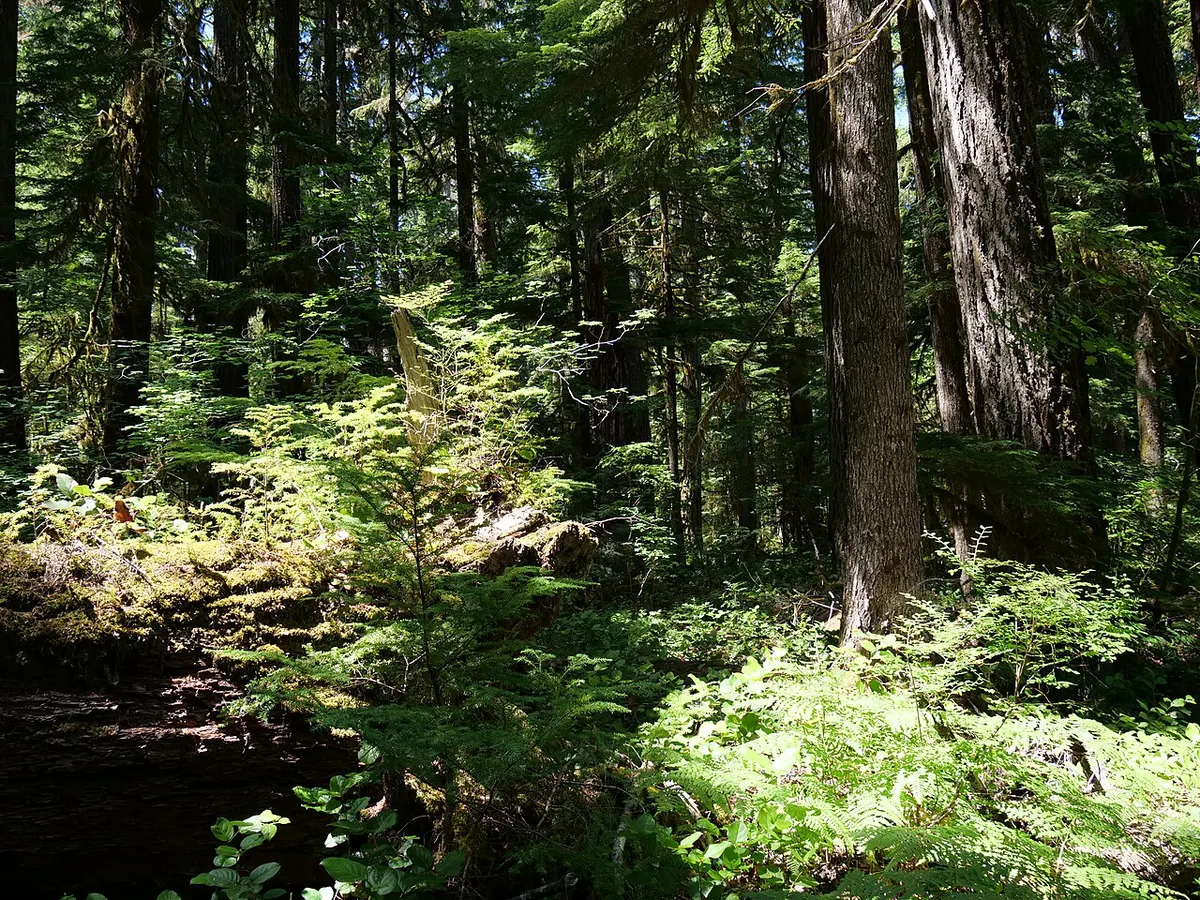
Skamania County, in southwest Washington, has a long and peculiar relationship with Bigfoot. It takes in Mount St. Helens’ Ape Canyon, home of a famous 1924 “ape men” story, and on April 1, 1969, its commissioners passed Ordinance 69-01, which made killing a Sasquatch a felony carrying up to five years behind bars and a fine of as much as $10,000. A 1984 amendment (Ordinance 1984-2) cut those penalties to misdemeanor levels, according to the Washington State Bar Association’s NWSidebar, but the county never stopped being Bigfoot country. The BFRO lists 66 reports from the county, second in Washington only to Pierce County’s 85.
In May 2026 it added another, and an unusual one: a daylight sighting from a moving car, with a second person – a jogger – apparently close by.
What the driver reported
According to BFRO report #80159, a woman identified as Gael K. was driving south on the Wind River Highway at about 50 mph around noon on Friday, May 8. One to two miles south of Stabler, where Hemlock Road joins the highway north of Carson – the BFRO’s headline puts the spot about six miles northwest of town – she noticed debris tumbling down a roadside bank and what she called “a large bolder [sic] in the ditch.” At the top of the slope stood an upright, furry, reddish-brown figure with dense forest behind it.
In her written report she said she could not judge its height and did not see a face, but described it as “definitely not human or a bear.” Her own first instinct, she added, was that the boulder had been pushed. A jogger, she said, was about 100 feet farther south. She submitted the report two days later, on Sunday, May 10 – the date some later coverage gave for the sighting itself. Coast to Coast AM’s website wrote up the account on May 12, and Idaho radio station KEZJ followed on May 28.
The investigator’s interpretation
In a follow-up, BFRO founder Matt Moneymaker called the driver, a 70-year-old retired state employee who has driven the Cascades for decades, “an excellent credible witness.” He wrote that the embankment is about 20 feet high, that the boulder – roughly 4 by 2 feet, by her estimate – came to rest partly on the road after a small slide, and that the figure stood motionless above it with its back to her, turned toward a petite, red-haired jogger about 100 feet farther down the road. Speaking with Moneymaker, the witness said the figure was roughly human-sized, perhaps a juvenile, with light brown fur a little more orange than tree bark, and that she was about 40 feet away at her closest.
Moneymaker floated the idea that the creature had pushed the rock down in reaction to the jogger; when he put it to her, the witness agreed this was “entirely possible.” He suggested that a local could find the boulder and check the slope for tracks. We found no such follow-up posted.
What it can’t tell us
The report rests on a few seconds’ view from a car at highway speed. Small rockslides are common on steep cuts along mountain roads, especially in spring, and need no animal to start them. The witness’s sense that the boulder had been pushed was an instinct, not something she saw, and the idea that it was aimed at the jogger came from the investigator. She saw no face, and her written report said she could not judge the figure’s height.
The most valuable piece of evidence may be the one nobody has heard from: the jogger, who had reportedly just run past the spot where the rocks came down. Without that second account, a photo, or tracks, the Wind River report remains an unverified witness claim – an intriguing one, in a county that has been telling Bigfoot stories for more than a century.
Sources
- BFRO report #80159: Daylight sighting by motorist along Wind River Hwy 6 miles northwest of Carson
- Coast to Coast AM via KFBK: Washington state driver reports Bigfoot sighting (May 12, 2026)
- KEZJ: Daylight Bigfoot sighting reported by Washington State witness (May 28, 2026)
- BFRO: Washington report listing by county
- Wikipedia: Skamania County, Washington
- Wikipedia: Ape Canyon
- WSBA NWSidebar: Washington rules to make you scream this Halloween (Oct. 31, 2019)