FIELD FILE · MIGOIHOMINIDREGIONAL LEGEND
Migoi
Also known as Migo, Mi-gö, Migyhur, Bhutanese yeti
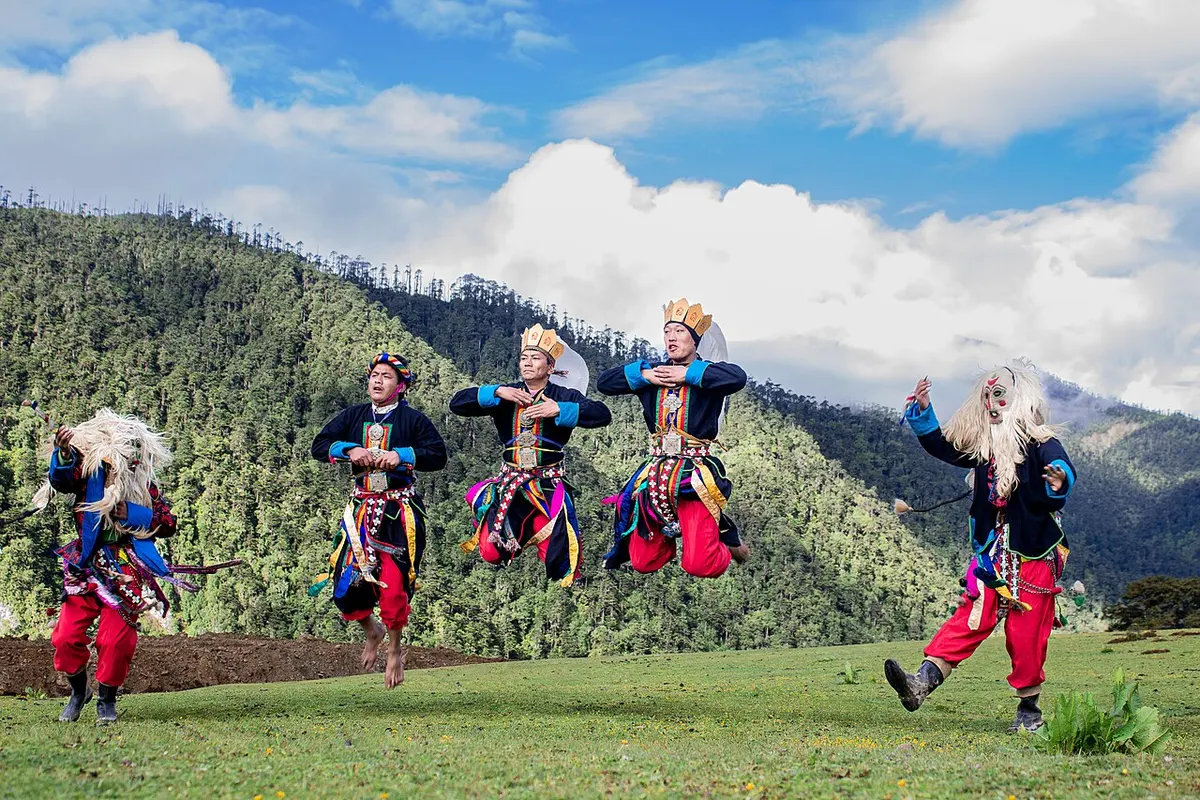
Bhutan’s “strong man” of the high forests, a yeti-like being of Brokpa tradition with a wildlife sanctuary often said to be set aside for it.
In Bhutan the yeti is known as the migoi (often translated “strong man” or “wild man”), and nowhere is it more at home than in the remote eastern valleys of Merak and Sakteng. These high pastures are the homeland of the Brokpa, semi-nomadic yak herders with their own language and distinctive dress, whose elders tell of mysterious footprints in the snow and of encounters with a towering, hairy figure on lonely mountain trails.
The migoi of Bhutanese tradition is not simply an unknown ape. Stories credit it with abilities no ordinary animal has: it is said to make itself invisible at will and to walk backwards – or, some say, on feet turned the wrong way – so that anyone following its trail heads the wrong way. Some tales are cautionary – in one, a villager who fought a migoi on a mountain path never came home, and only the footprints were left. Such stories sit alongside a wider Himalayan Buddhist landscape of mountain spirits and wild beings, and are best understood as part of that living tradition.
Bhutan has treated the migoi with unusual official warmth. The kingdom featured the creature on postage stamps in the 1960s, and when the Sakteng Wildlife Sanctuary was established in 2003 it was widely reported as the only protected area in the world created partly to safeguard yeti habitat. In reality the sanctuary protects temperate forests of blue pine and dozens of rhododendron species along with red pandas, bears and leopards – but the migoi became its unofficial emblem.
Science has had a few tantalising brushes with the migoi. In 2001 British researchers filming in Bhutan collected hair from a hollow tree near footprints and scratch marks, and Oxford geneticist Bryan Sykes admitted he could not identify the DNA. In 2014 a Bhutanese sample from a so-called migyhur nest in a high bamboo forest matched an ancient polar bear sequence in Sykes’s survey, a result later interpreted by other scientists as most likely an ordinary Himalayan bear.
Today the migoi is increasingly part of eastern Bhutan’s effort to attract visitors to its least-explored corner. Treks link Merak and Sakteng, and in May 2026 the Sakteng administration staged a three-day “Great Yeti Quest” festival of Brokpa songs, dances, storytelling and a Yeti Run, while noting plainly that there is no scientific evidence that the creature exists.
- Type
- Hominid
- Status
- Regional legend
- First reported
- Traditional
- Best-known location
- Merak and Sakteng highlands, eastern Bhutan
- Also called
- Migo, Mi-gö, Migyhur, Bhutanese yeti
- Reported in
- Bhutan
What witnesses describe
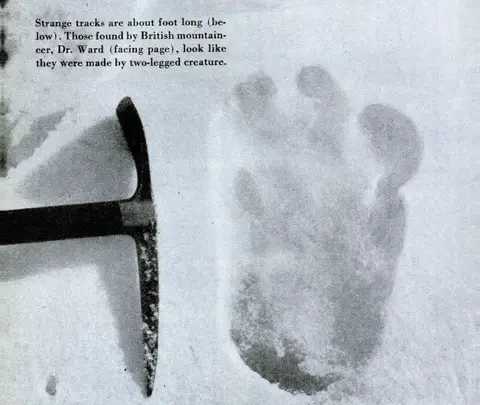
Described as ape-like, upright and very tall – often around 2.5 m (8 ft) – covered in dark or reddish hair and possessed of great strength. Traditions say it can turn invisible and that its feet point backwards, confusing trackers. Bhutan’s Nature Conservation Division has shown framed plaster casts of footprints said to be about 30 cm (12 in) long.
Where and when it’s seen
Remote temperate and subalpine forests, bamboo thickets and high pastures of eastern and central Bhutan, especially the Merak–Sakteng highlands near the Arunachal Pradesh border and the forests around Thrumshingla and Bumthang, roughly 1,500–4,500 m.
Notable sightings
- 1966The migoi goes on Bhutan’s stamps Bhutan
Bhutan issued postage stamps depicting the yeti, an early sign of the official affection the kingdom would show the creature. Bhutanese press accounts place the first migoi stamps in the 1960s.
- 2001Unidentified hair in a hollow tree Forests of Bhutan
A British filming expedition found hair inside the hollow of a cedar tree, close to footprints and scratch marks. Geneticist Bryan Sykes said at the time that the team found DNA in it but did not know what it was.
- 2003Sakteng Wildlife Sanctuary created Trashigang District, Bhutan
Bhutan established the Sakteng Wildlife Sanctuary in its far east. Environmental news outlets described it as the world’s only reserve created specifically to protect migoi habitat, a claim that brought the Brokpa homeland international attention.
- September 3, 2012“Yeti droppings” reported in Bumthang Bumthang, Bhutan
A ranger from Thrumshingla National Park filed a report on droppings that a Bumthang villager said he had collected in a blue pine forest in August 2011 and believed came from a migoi. Park officials sent them for DNA analysis to identify the species.
- August 22, 2014Bhutan sample in the Sykes DNA survey Oxford, United Kingdom
Sykes and colleagues published a genetic survey in which a reddish-brown hair from a supposed migyhur nest, collected at about 3,500 m in Bhutan, matched a Pleistocene polar bear sequence. The authors called the result preliminary; other researchers attributed it to known bears.
- May 8, 2026The Great Yeti Quest festival Sakteng, Trashigang, Bhutan
Sakteng Dungkhag opened a three-day festival celebrating Brokpa culture and migoi lore, with performances in village homes, food stalls and a Yeti Run. More than 1,000 people attended on the first day.
What could explain it?
- Bears: Himalayan black and brown bears live in the same forests, and a bear placing its hind feet in its front-foot prints can leave a trail that looks two-legged.
- DNA from Bhutanese “migoi” and “yeti” samples has either been unidentifiable from degraded material or traced to bears.
- Supernatural traits such as invisibility and backward-walking are characteristic of folklore rather than zoology, and suggest the migoi is first of all a cultural and spiritual figure.
- Large, distorted footprints in snow can be produced by melting and refreezing of ordinary animal tracks.
Legend, culture and tourism
For the Brokpa of Merak and Sakteng the migoi is part of an inherited landscape of mountain beings, recounted by elders and in local storytelling. Bhutan has honoured it on stamps, and the Sakteng Wildlife Sanctuary is popularly known as the yeti’s reserve. Tourism authorities have promoted Merak–Sakteng treks and a planned yeti-themed trail, and the 2026 Great Yeti Quest festival used the legend to showcase Brokpa weddings, house consecrations, dances and dairy products.
Places to visit
The remote sanctuary of blue pine and rhododendron forest popularly described as protecting migoi habitat, reached on foot via the Merak–Sakteng trek.
Brokpa herding villages where elders still tell migoi stories and the Great Yeti Quest festival is staged.
Where it’s reported
Bhutan Trashigang Bumthang
Migoi in the news
No recent headlines about the Migoi. Our news desk checks every day — see all cryptid news.
Sources
- High Country News: A most unusual sanctuary, where the yeti roams free (2005)
- The Bhutanese: The abominable snowman ‘drops’ by Thrumshingla (2012)
- Daily Bhutan: Remote Sakteng comes alive with Bhutan’s Great Yeti Quest festival (2026)
- Proceedings of the Royal Society B (via PMC): Genetic analysis of hair samples attributed to yeti, bigfoot and other anomalous primates
- Wikipedia: Yeti
First published · Updated