Field file · Hominid · Local legend
Mande Barung
Also known as Mande Burung, Indian Bigfoot, Meghalaya yeti
A giant, hairy ape-man said to roam the forests of Meghalaya’s Garo Hills; hair collected there in 2008 turned out to belong to a goral.
Mande Barung (also spelled Mande Burung) is the name given by the Garo people to a huge, hair-covered creature said to inhabit the forests of the Garo Hills in Meghalaya, north-east India. Believers describe it as about three metres tall, herbivorous and shy, and compare it with the yeti, the yowie and Bigfoot. Some supporters have speculated that it could be a surviving relative of the extinct giant ape Gigantopithecus, a theory without fossil support in India.
The legend reached an international audience in 2007–2008. Monster-hunting tours were advertised in Meghalaya in 2007, while forest officers responded that no such large primate lived in the area. In 2008 the BBC reporter Alastair Lawson, travelling with local enthusiast Dipu Marak, was given tufts of hair said to come from a creature a forester had allegedly seen on three consecutive days in 2003. Biologist Ian Redmond arranged examination at Oxford Brookes University, where the hairs looked ‘slightly human’ and ‘slightly like an orang-utan’ but were inconclusive; DNA tests followed in Oxford and Cardiff.
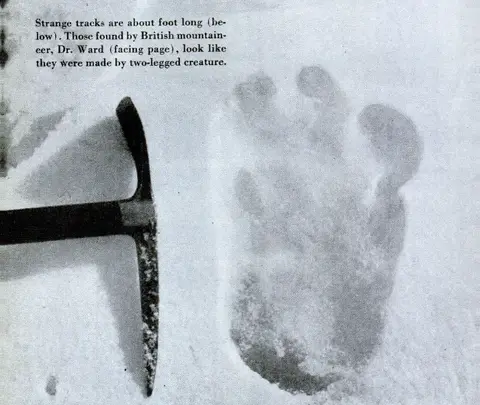
The final results, reported later, showed the hair came from a goral, a goat-like mountain animal. The case is often cited as an example of how a hopeful sample can turn out to be a known species. In 2019 the Indian Army’s attempt to publicise footprints at Makalu raised interest in Indian yeti lore again, but it did not produce new Mande Barung evidence.
For the Garo, forest spirits and wild beings belong to an older cosmology, and the Mande Barung story sits between that tradition and a modern cryptozoological tourism pitch.
What does Mande Barung look like?
A massive, long-armed ape-man with shaggy dark hair, reported at around three metres and 300 kilograms; said to be a vegetarian that avoids people.
Where is Mande Barung seen?
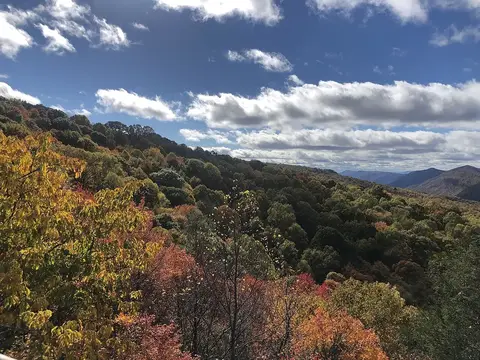
Subtropical hill forest in the Garo Hills of Meghalaya, near the Bangladesh border.
Mande Barung sightings
- 2003A forester’s account Garo Hills
According to Dipu Marak, a forest worker claimed to have seen the creature on three days in a row; hair was later gathered nearby.
- June 2007Monster-hunt tours announced Meghalaya
Press reports said enthusiasts were offering expeditions, while forest officials denied that giant primates lived in the area.
- June 2008BBC reports on the trail Garo Hills
Alastair Lawson reported on Marak’s search and returned to Britain with hair samples for study.
- July 2008Hair sent for DNA analysis Oxford and Cardiff, UK
After microscope work at Oxford Brookes University, the hairs went to two laboratories; the identification was later given as a goral.
Is Mande Barung real? What could explain it
- The DNA testing of the 2008 hair identified a goral, a wild goat relative, not an ape.
- Large Asian black bears and sun bears can be mistaken for an upright ape, and bears are present in north-east India.
- The tour-promotion context suggests local tourism enthusiasm, and no fossil Gigantopithecus has been found in India.
Legend, culture and tourism
Part of the wider family of Asian wild-man legends, Mande Barung was publicised by BBC coverage and by local enthusiasts who would like a tourism draw. The Garo Hills are also known for their living tribal culture.
Places to visit
Remote plateau and forest park with rich wildlife in the heart of the Garo country.
Where it’s reported
Sources
First published · Updated