Field file · Other · Folklore
Kratt
Also known as Pisuhänd, Tulihänd, Puuk, Vedaja, Kratti (Finland)
Estonia’s kratt: a treasure-hauling servant made from hay or old tools, brought to life with three drops of blood – and a modern metaphor for AI.
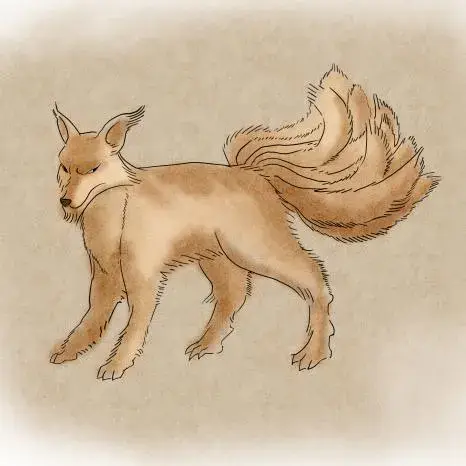
The kratt is a magical servant in Estonian folklore, a household treasure-bearer that steals goods for its master. Folk accounts say a farmer made one from hay or old household and farm tools, then sold his soul to the Devil, giving three drops of his own blood, to bring it to life. The creature was said to fly, sometimes as a fiery streak across the sky, carrying grain, money or other goods from the neighbours’ homes to its owner. Related names include pisuhänd and tulihänd.
The kratt did whatever it was told, but it had to be kept busy. A master who ran out of tasks risked being harmed by it, so he gave it an impossible job, such as carrying water in a sieve or building a ladder from bread, until it burst into flames. In the folk astronomy of Estonia, a bright fireball was seen as a kratt burning up after being given such a task.
The word appears in print as early as 1551, when Mikael Agricola mentioned a “Kratti” as a false god of the Tavastians in Finland, where a similar treasure guardian is known as Kratti or Aarni.
The figure has had a rich cultural second life. Eduard Tubin’s ballet Kratt premiered at the Estonia theatre on 24 February 1944, Andrus Kivirähk’s novel Rehepapp (2000) retells the tale, and the 2017 film November is based on it. Today Estonians also use “kratt” as a metaphor for artificial intelligence, and a law on algorithmic liability is nicknamed the “Kratt law.”
What does Kratt look like?
A rough humanoid or animated bundle of hay, straw or tools; seen at night, in some tales, as a streak of fire in the sky.
Where is Kratt seen?
Farmsteads and the night sky over rural Estonia, where it was said to carry goods.
Kratt sightings
- 1551Agricola’s ‘Kratti’ Finland
Mikael Agricola listed Kratti among the false gods of the Tavastians, an early printed mention of the name.
- February 24, 1944Tubin’s ballet premiere Tallinn
Eduard Tubin’s ballet Kratt premiered at the Estonia theatre in a revised version; a Soviet air raid later destroyed the theatre and the complete score.
- 2000Rehepapp Estonia
Andrus Kivirähk’s novel made the kratt central to contemporary Estonian literature.
Is Kratt real? What could explain it
- Stories of a flying creature that brings treasure seem to explain the sight of meteors and fireballs in the night sky, as well as sudden unexplained wealth or missing goods.
- Folklorists link the figure to a family of artificial servants, such as the Jewish golem and Finnic treasure-bearers, in which an artificial being does a master’s work.
- The tale carries a moral warning about greed and bargains with the Devil, and in modern Estonia it is used to talk about machines acting without human oversight.
Legend, culture and tourism
The kratt is one of Estonia’s best-known folklore figures, with a ballet, a novel and a film, and now a place in public talk about technology. Eduard Tubin was encouraged by Zoltán Kodály to use folk material, and the ballet was later rebuilt after the war from surviving parts.
Where it’s reported
Sources
First published · Updated