Field file · Humanoid · Folklore
Curupira
Also known as Korupira, Kurupí, Caipora (related figure)
The backwards-footed forest guardian of Tupi-Guaraní tradition, who leads hunters and loggers astray and is appeased with tobacco and cachaça.
The Curupira is a forest spirit of Tupi-Guaraní tradition, known in Brazil, Paraguay and the Guianas. It protects forests and their animals, and punishes those who hunt for sport or cut too much. Its signature trait is feet that point backwards, so anyone following its footprints is led in the wrong direction.
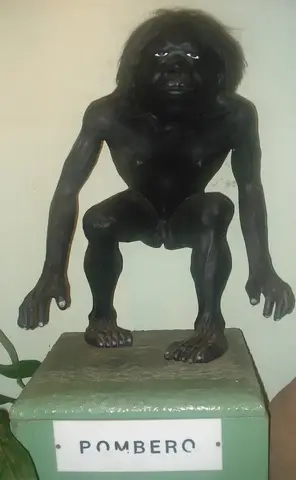
Descriptions vary: a small “brown man” or caboclinho, sometimes bald or hairy, sometimes with blue or green teeth. The popular image of a red-haired boy comes from conflation with the related Caipora. It disorients intruders so they wander the forest until exhausted, and in some stories it causes nightmares or even death.
The earliest written mention is a letter from the Jesuit José de Anchieta dated 30 May 1560 from São Vicente, which speaks of “demons” the Brazilians call corupira attacking Indigenous people in the bush. Later chroniclers in 1584, 1640 and the 1800s – including the naturalist Henry Walter Bates – recorded the belief. Hunters traditionally left tobacco or cachaça for it, and charms such as a liana cross were said to occupy it unravelling the pattern.
The Curupira has become a conservation icon: Brazil’s conservation foundation FBCN adopted it as a symbol in 1958 and São Paulo State made it a forest-guardian emblem by a 1970 law.
What does Curupira look like?
A short figure with backward feet, usually red-haired in modern images though older descriptions give a hairy or bald brown man with odd teeth.
Where is Curupira seen?
Atlantic forest and Amazon rainforest of Brazil and the Guaraní regions of Paraguay and north-eastern Argentina.
Curupira sightings
- May 30, 1560Anchieta’s letter São Vicente, Brazil
The Jesuit José de Anchieta wrote of “demons” called corupira who attacked Indigenous people in the bush, the earliest known mention.
- 1864Bates in the Amazon Amazon, Brazil
Naturalist Henry Walter Bates described the belief in his The Naturalist on the River Amazons, one of several nineteenth-century writers to do so.
- 1970São Paulo adopts the Curupira São Paulo, Brazil
A state law made the Curupira a symbol of forest protection.
Is Curupira real? What could explain it
- The Curupira is a spiritual guardian in folk belief, not a claimed animal. Getting lost in dense forest is naturally explained by a spirit who reverses paths.
- One scholar proposed that the backward-feet motif derives from wearing reversed footwear to confuse trackers.
- Hairy forest-dwellers appear in many cultures, and some writers compare it to Pan.
Legend, culture and tourism
The Curupira is among Brazil’s best-known folk figures, in children’s literature, school folklore and environmental campaigns, and is part of Indigenous traditions that still exist.
Where it’s reported
Sources
First published · Updated