COUNTRY FILE · SOUTH AMERICA
Cryptids of Chile
What cryptids are in Chile? The best-known are Trauco and Chupacabra.
Chile stretches more than 4,000 kilometres from the Atacama Desert to Patagonia, and its legends change with the landscape. Its most distinctive folklore comes from the rainy, forested Chiloé Archipelago in the south, where centuries of isolation blended Huilliche (southern Mapuche) beliefs with Spanish folk Catholicism into a mythology all its own: the sea spirit Pincoya, the ghost ship Caleuche that sails with the souls of drowned sailors, the serpents Tentén Vilú and Caicai Vilú whose battle shaped the islands – and the Trauco.
Cryptids reported in Chile
 HUMANOID · Pre-colonial
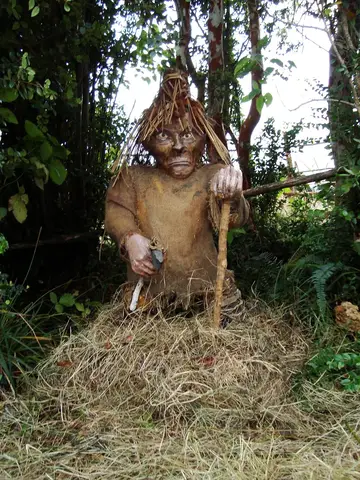
Trauco
Forests of the Chiloé Archipelago, southern Chile
A stunted, footless forest man of Chiloé’s folklore who fells trees with a stone axe, curses men with a glance and is blamed for bewitching young women.
FOLKLORE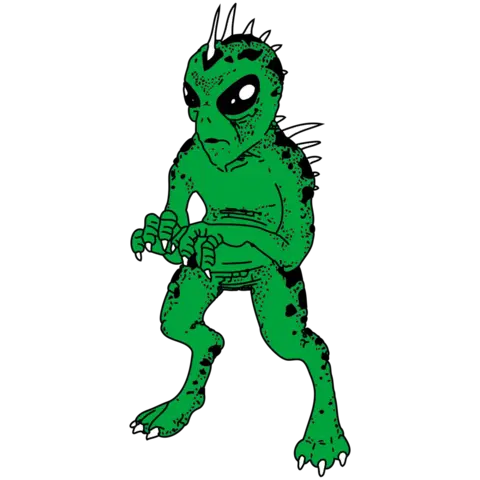 OTHER · 1995
Chupacabra
Canóvanas, Puerto Rico
The “goat-sucker” of 1990s Puerto Rico: a spiny, bloodsucking beast blamed for livestock deaths that spread across Latin America and Texas.
WIDELY REPORTEDThe legends of Chile
The Trauco is a short, ugly, footless forest man dressed in clothes woven from vines, who fells trees with a stone axe, curses men with a single look and is said to bewitch young women. In traditional Chilote society he was blamed when an unmarried woman became pregnant, sparing her and the child from stigma – a social role folklorists find fascinating, and one modern Chileans increasingly discuss for what it may have hidden. Chiloé’s folklore was first studied seriously in the early 20th century, notably in Francisco Javier Cavada’s Chiloé y los chilotes (1914).
In the north, Chile had its own chupacabra panic in 2000, centred on the desert mining city of Calama, when dead livestock and frightened residents made national headlines. For visitors, Chiloé is the place to meet the myths: the mythological corner of the municipal park in Castro has statues of the Trauco and his companions, and the island’s UNESCO-listed wooden churches show how deeply faith and folklore have intertwined.
Hotspots
Home of Chilote mythology, where the Trauco is said to roam the dense, damp native forests.
The island capital, whose municipal park has a corner of carved and painted statues of the Trauco and other mythical beings.
Desert mining city at the centre of Chile’s chupacabra scare in 2000.
Sightings timeline
- 1914<em>Chiloé y los chilotes</em> Trauco
Francisco Javier Cavada published his pioneering study of Chiloé’s folklore and dialect, one of the first serious attempts to document the islanders’ beliefs about creatures such as the Trauco.
- 1915Vicuña Cifuentes’s collection of Chilean myths Trauco
Julio Vicuña Cifuentes published Mitos y supersticiones recogidos de la tradición oral chilena, an early national collection of folk beliefs that includes entries on the Trauco.
- April 2000The Calama killings Chupacabra
Around a hundred farm animals were reported killed in Chile’s northern desert region, reviving the legend in South America. Reports in Chile continued sporadically until 2002.
Latest from Chile
No recent cryptid headlines from Chile. See all the latest cryptid news.
Videos
 ▶ VIDEO
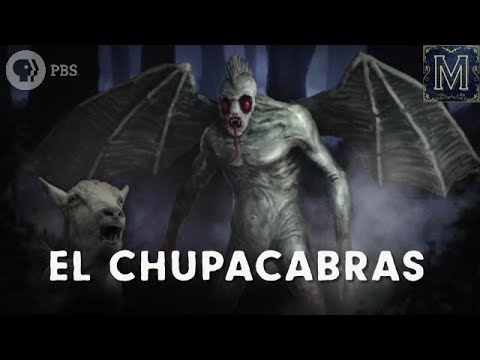
El Chupacabras, a Modern Mystery
Monstrum | PBS StoriedFolklorist Emily Zarka traces both the Puerto Rican and the Texas chupacabra and the real explanations behind them.