Field file · Spectral · Folklore
La Tulivieja
Also known as Tulevieja, Tule Vieja, Tepesa (Ngäbe)
A winged, hat-wearing river ghost of Panama and Costa Rica, the cursed mother of a drowned baby, said to lure careless men and flee at prayer.
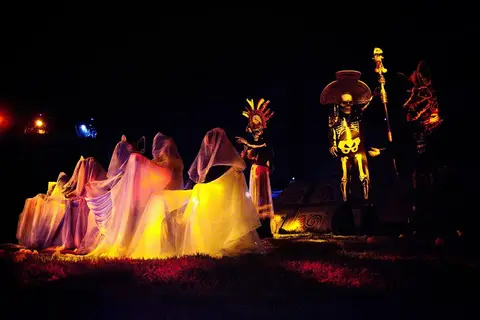
La Tulivieja is a monstrous ghost told of in Panama and Costa Rica. The name comes from tule, the pointed straw hat she wears. Tellings give her tangled hair, bird or bat wings, claws, reversed footprints and breasts overflowing with milk.
In the usual story a young woman with a secret pregnancy drowns her newborn in a river and is transformed by God into a monster condemned to search for the child forever. In some regions she merges with La Llorona and steals babies. She is also said to eat charcoal and ashes, so her tracks appear near dead campfires.
Researchers link parts of the legend to the Bribri people of Talamanca, on the Costa Rica–Panama border, whose mythology includes a similar being. In Ngäbe-Buglé tradition she is called Tepesa. Folklorists see it as a blend of Indigenous belief and Spanish colonial ghost stories.
She punishes lustful men and irresponsible fathers by luring them to dance, and the traditional defence is a prayer, “Alabado sea el Santísimo”, which sends her flying toward the sun. In everyday Panamanian speech “salió la Tulivieja” teases a partner who turns out less charming than expected.
What does La Tulivieja look like?
A short, heavy woman with tangled hair, a pointed straw hat, wings, hawk-like legs and backward feet, dripping milk.
Where is La Tulivieja seen?
Rivers, riverbanks and abandoned rural places in Panama and the Talamanca region, mostly at night.
La Tulivieja sightings
- 1998Zeledón’s Leyendas costarricenses Costa Rica
Elías Zeledón Cartín’s collection of Costa Rican legends is a standard printed source for the Tulevieja story.
- 2003Diccionario de mitología bribri Costa Rica
Carla Jara and Alí García’s dictionary of Bribri mythology is cited for the legend’s Talamancan roots.
- April 24, 2018USC folklore collection Los Angeles
A Panamanian student recounted the legend to the USC Digital Folklore Archives, calling it one of Panama’s most popular tales.
Is La Tulivieja real? What could explain it
- The legend works as a moral warning about infanticide, seduction and neglect, and ties to the wider La Llorona family.
- Night birds, bats and reversed tracks left by foraging animals may have helped create the physical details.
Legend, culture and tourism
The Tulivieja is one of Panama’s best-known legends, taught in schools and told across Panama and Costa Rica.
Where it’s reported
Sources
First published · Updated