FIELD FILE · ROPENFLYINGREGIONAL LEGEND
Ropen
Also known as Duwas, Indava, Papua New Guinea pterosaur
A glowing, long-tailed night flyer of Umboi that creationist explorers hoped was a living pterosaur – and scientists blame on bats, birds and planes.
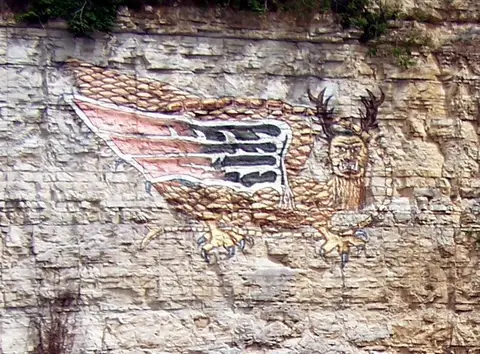
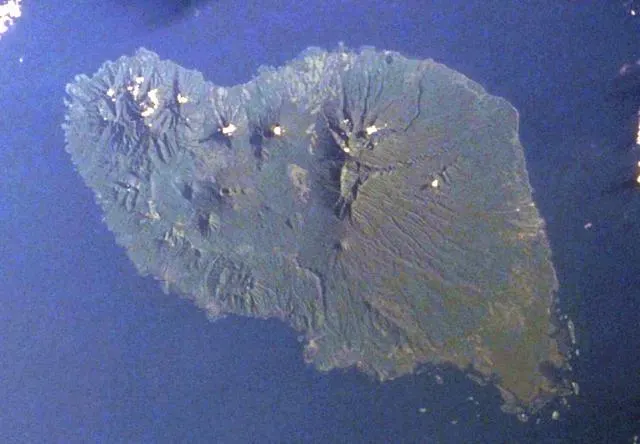
The ropen is a nocturnal flying creature said to haunt Umboi Island, a mountainous volcanic island in the Vitiaz Strait between mainland New Guinea and New Britain, and the coasts nearby. In its popular form it is a large, leathery-winged animal with a long tail ending in a diamond-shaped flap, a toothed beak and sometimes a crest on its head – and, most strikingly, a body that glows as it flies by night. To its promoters it is a surviving pterosaur; to most biologists it is a story built from flying foxes, frigatebirds, distant lights and wishful thinking.
On Umboi and neighbouring coasts, people speak of lights that move along the mountainsides at night, and of creatures known in different villages by names such as ropen, duwas and indava. Investigators who visited the island collected testimony about such lights and about large flying animals said to feed on fish. As with many cryptids drawn from local tradition, the words cover a range of beings and phenomena, and the meanings given to them by outside visitors do not always match the meanings they have at home.
The modern legend began with an American serviceman. Duane Hodgkinson, later a flight instructor in Montana, said that in 1944, while stationed near Finschhafen on the Huon Peninsula, he and a companion saw a huge flying animal while walking a jungle trail with a local guide; decades later he estimated its wingspan at around 29 feet and compared it to a light aircraft. His account was recorded on video in 2005 by ropen enthusiasts Garth Guessman and Jonathan Whitcomb.
From the 1990s onward, a series of small expeditions – most of them organised by young-Earth creationists – visited Umboi in search of the animal; at least six Americans had searched the island by 2004. That year Whitcomb, and separately David Woetzel and Guessman, interviewed villagers on the island, and Paul Nation, who led several trips, later said he had photographed glowing lights there. For several of these searchers the stakes were theological: Woetzel argued in the Creation Research Society Quarterly that living pterosaurs would show humans and “dinosaurs” had always coexisted, and identified them with the “fiery flying serpent” of the Book of Isaiah.
Television followed. A team from the series MonsterQuest visited Papua New Guinea with the British palaeontologist David Martill, who concluded that the mysterious lights witnesses described rising from a mountain and returning the next morning followed the timing and route of a scheduled commercial flight. In 2010 a widely shared video claimed to show a living pterosaur over Papua New Guinea; writing for Smithsonian, Riley Black pointed out that it plainly showed a frigatebird.
No specimen, bone, clear photograph or verifiable video of a ropen has ever been produced. The real flying wildlife of Umboi and New Guinea – including some of the world’s largest fruit bats, which have wingspans well over a metre – is extraordinary enough without one.
- Type
- Flying
- Status
- Regional legend
- First reported
- 1944
- Best-known location
- Umboi Island and the Huon Gulf coast, Papua New Guinea
- Also called
- Duwas, Indava, Papua New Guinea pterosaur
- Reported in
- Papua New Guinea
What witnesses describe
Described as a dark grey or reddish-brown flyer with leathery, bat-like wings – wingspans from about 1 m to an improbable 9 m (29 ft) are claimed – a long tail ending in a diamond-shaped vane, a beak or toothed jaws, and sometimes a head crest. Many accounts describe only a glowing light moving through the night sky for a few seconds.
Where and when it’s seen
Mountain forest, coastal reefs and village fringes of Umboi Island and the Siassi Islands, with related reports from the Huon Peninsula near Finschhafen and other islands of the region. It is said to be active only at night, often seen over the sea or along ridgelines.
Notable sightings
- 1944Hodgkinson’s giant flyer Near Finschhafen, Huon Peninsula
US serviceman Duane Hodgkinson said that he and a companion saw a huge, long-tailed flying animal pass over them near a jungle trail. He told the story for decades and was interviewed on camera by ropen researchers in 2005.
- 2004Two creationist expeditions to Umboi Umboi Island, Morobe Province
Jonathan Whitcomb, and separately David Woetzel and Garth Guessman, travelled to Umboi to interview villagers about the ropen and its lights. They returned convinced of the creature but without photographs.
- 2006A light on camera Umboi Island area
Paul Nation, who made several visits to the region, reported photographing a glowing light he believed was not man-made. Skeptics noted that distant lights at night are notoriously hard to interpret.
- c. 2009MonsterQuest and the airline lights Papua New Guinea
Palaeontologist David Martill joined a MonsterQuest investigation and found that lights witnesses described leaving and returning to a mountain matched a scheduled commercial flight and its return service.
- August 2010The frigatebird video Online
An online article claimed video proof of living pterosaurs in Papua New Guinea. Smithsonian’s Riley Black showed that the footage clearly depicted a frigatebird, probably a female great frigatebird.
What could explain it?
- Large fruit bats (flying foxes) live throughout New Guinea and its islands; seen at dusk, their leathery wings and size can suggest something prehistoric.
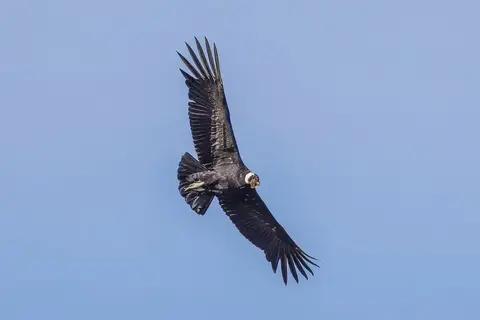
- Frigatebirds, with long, angular wings and deeply forked tails, have been identified in at least one widely circulated “pterosaur” video.
- Many ropen reports are of lights alone, which can be explained by aircraft, meteors, torches, fires, boats or atmospheric effects; one investigation linked them to a scheduled airline route.
- Glowing land vertebrates are essentially unknown, and a luminous animal flying at night would be easy prey – one of several reasons palaeontologists consider the idea implausible.
- No pterosaur fossil is younger than the end-Cretaceous extinction about 66 million years ago, and long-tailed pterosaurs disappear from the record far earlier.
- Most ropen expeditions were organised by young-Earth creationists hoping to challenge evolutionary timelines, and interpreters and leading questions may have shaped what villagers were understood to say.
Legend, culture and tourism
The ropen is the centrepiece of the “living pterosaur” movement, promoted through Jonathan Whitcomb’s books and websites and through creationist publications. It has appeared on cable TV series such as MonsterQuest and in countless monster lists online, but it has little presence in Papua New Guinea’s own tourism or popular culture.
Places to visit
Remote volcanic island in the Vitiaz Strait, reached only by boat, with rainforest-clad mountains and reef-fringed coasts.
Coastal town and former World War II base near where Duane Hodgkinson reported his 1944 sighting.
Where it’s reported
Papua New Guinea Morobe
Ropen in the news
No recent headlines about the Ropen. Our news desk checks every day — see all cryptid news.
Sources
First published · Updated