Field file · Spectral · Folklore
Lidérc
Also known as Lüdérc, Ludvérc, Piritusz, Hungarian will-o’-the-wisp
The lidérc of Hungarian folklore: a black-hen-egg familiar that brings wealth and drains its owner, or a fiery night lover that flies in by the chimney.
The lidérc is a many-sided being from Hungarian folklore, recorded in Hungary and in Hungarian communities in Transylvania and Moldavia. Folklorists distinguish three forms that overlap: a household chicken, a tiny “earthly devil,” and a flying fire.
The household form hatches from the first egg of a black hen kept warm under a person’s arm. It sleeps beside its owner, fetches money and gold, and keeps asking what to bring, and an owner who cannot answer faces trouble. Wealth comes at a price: in many tales the lidérc drains its owner’s strength, causing sickness and sometimes death. The “earthly devil” form is a tiny being found by chance in a box, rags or a pocket.
The flying form travels at night as a fiery light, a will-o’-the-wisp or a fire-bird. It can take the face of an absent husband or lover while keeping an animal’s leg, enters through the chimney or keyhole and leaves soot behind. It must leave by first cockcrow.
To be rid of one, tales say the owner sets it an endless task, such as carrying sand in a rope or water in a sieve. The word survives in modern Hungarian: lidércfény is a will-o’-the-wisp, and lidércnyomás means a nightmare, though folklore sources note that nightmares were mostly blamed on witches.
What does Lidérc look like?
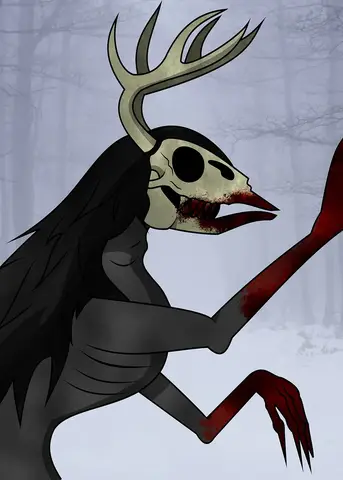
A bald, talking chicken; a tiny devil; or a flame that flits at night, sometimes with a human face and an animal’s leg.
Where is Lidérc seen?
Farmhouses, hearths and marshes; the flying form is a night apparition near wetlands and cemeteries.
Is Lidérc real? What could explain it
- Marsh gas flickering over swamps (will-o’-the-wisp) explains the fiery wandering light.
- Sudden unexplained wealth or illness in a household could be attributed to a familiar spirit, a common motif across Europe.
- The nightmare connection reflects the old belief that a pressing night spirit sat on the sleeper; modern Hungarian preserves it in lidércnyomás.
Legend, culture and tourism
The lidérc appears in Hungarian tales, in Umberto Eco’s novel The Name of the Rose (as a spell using black hens’ eggs), and in modern fantasy and television.
Where it’s reported
Sources
First published · Updated