Country file · Europe
Cryptids of Russia
What cryptids are in Russia? The best-known are Almas, Brosno Dragon, Labynkyr Devil and Rusalka, among 5 on file.
European Russia is a vast country of forests, rivers and thousands of glacial lakes, and its folklore is crowded with water spirits – the vodyanoy who drowns the unwary and the rusalka who lures them – long before anyone spoke of “cryptids.” The most famous lake monster west of the Urals lives in Lake Brosno, a deep, narrow lake in the forests of Tver Oblast near Andreapol. Local legend says that when Batu Khan’s Mongol army camped on its shore on the way to Novgorod in the 13th century, a dragon rose from the water and frightened the invaders into turning back; later stories have it swallowing a German airman during World War II.
- 5 cryptids
- 6 recorded sightings
Cryptids reported in Russia
Almas
Central Asia’s “wild man”: a hairy, human-like figure reported from the Altai and Gobi to the Pamirs and Caucasus, once hailed as a surviving Neanderthal. Regional legendBrosno Dragon
The “Russian Loch Ness Monster,” a dragon said to haunt deep Lake Brosno in Tver Oblast, where legend says it once scared off Batu Khan’s army. Local legend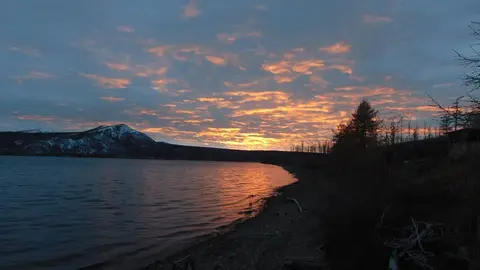
Labynkyr Devil
A dark, aggressive lake monster said to live in Yakutia’s unfrozen Lake Labynkyr, near Oymyakon; a 2013 dive found only dogfish. Local legendRusalka
Rusalka, the East Slavic spirit of drowned young women, feared in “Rusalka week” in early June and the heroine of operas by Dargomyzhsky and Dvořák. FolkloreVodník
The vodník, Czech water goblin: a green-coated pond spirit who keeps drowned souls under upturned pots, famed from Erben’s ballad and Dvořák’s music. FolkloreThe legends of Russia
The Brosno dragon became national news in 1996, when a Tver newspaper published witness stories and organised an expedition, followed by reports from Itar-Tass and Reuters, and in 2002 researchers from the group Kosmopoisk surveyed the lake with echo sounders. Scientists point to bubbles of gas from decaying matter and possible faults in the lake bed, which can churn the water dramatically, and to beavers and large pike.
Russia also figures in the story of the almas, the hairy “wild man” of Central Asia. In the Soviet era, the historian Boris Porshnev made the “snowman question” a subject of serious study, and the researcher Marie-Jeanne Koffmann spent decades collecting reports of a similar being, the almasty, in the Caucasus mountains of Kabardino-Balkaria. For visitors, Brosno offers quiet fishing villages and forest shores; the Caucasus offers some of Europe’s highest mountains.
Hotspots
- Lake Brosno, Tver Oblast
The deepest lake in Tver Oblast, home of the legendary dragon Brosnya.
- Kabardino-Balkaria, North Caucasus
Mountain republic where Marie-Jeanne Koffmann collected reports of the hairy wild man, the almasty, over several decades.
- Lake Labynkyr, Yakutia
Unfrozen lake near Oymyakon with the ‘Labynkyr Devil’ legend and a 2013 dive.
Sightings timeline
- 13th century (legend)Batu Khan turns back Brosno Dragon
According to local legend, a monster from the lake attacked the camp of Batu Khan’s Mongol army as it advanced on Novgorod, and the khan retreated. The story is folklore, recorded long after the invasion.
- 1953Tverdokhlebov’s account Labynkyr Devil
Geologist Viktor Tverdokhlebov wrote the first known report of the lake’s creature, floating hypotheses such as a giant pike.
- December 1996Reuters reports from Brosno Brosno Dragon
After a regional newspaper’s articles and expedition in late 1996, Reuters filed a report quoting worried local residents and paleontologists about the supposed creature, bringing Brosnya to an international audience.
- 2000Echo-sounder reading Labynkyr Devil
A fisherman reported that his echo sounder showed something large beneath his boat.
- Summer 2002Kosmopoisk echo-sounding Brosno Dragon
Researchers from the Russian group Kosmopoisk surveyed the lake with an echo sounder and said they detected a large moving mass. The readings were never confirmed as an animal.
- February 2013Under-ice expedition Labynkyr Devil
Shiller’s divers recorded a 59.6 m dive and met only dogfish; claims of bones were not confirmed.
