Field file · Humanoid · Folklore
Sasabonsam
Also known as Asasabonsam, Asanbosam, Sasabonsam Nwuma
An iron-toothed forest being of Akan and Ashanti tradition that lurks in tall trees; a guardian-warning figure also recorded in 18th-century Jamaica.
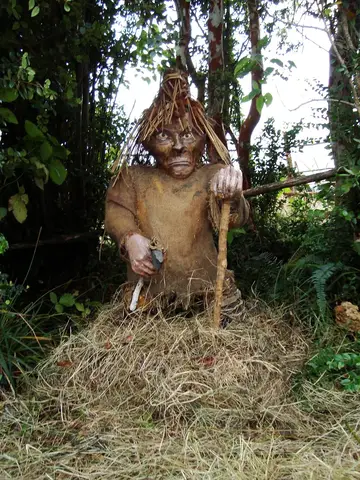
The sasabonsam, also spelled asasabonsam or asanbosam, is a forest spirit of the Akan peoples of southern Ghana, and is also known in neighbouring Côte d’Ivoire and Togo. Tradition describes a lanky, hairy figure with long limbs, sharp claws, red or bloodshot eyes and teeth or hooks of iron. It lives in the high branches of forest trees, in particular the huge silk-cotton tree, and drops on or entangles hunters and travellers who stray into its territory.
Descriptions differ between tellers and books. A dictionary of world mythology gives a creature with large red eyes, long legs and feet that point both ways, whose favourite trick is to sit in a branch and dangle its legs to snare passers-by. Some modern writers add bat-like wings and a taste for blood, which has led to comparisons with vampires, though the blood-drinking is described only in some versions. In many accounts the being is a warning about the dangers and sacredness of the forest.
The belief crossed the Atlantic: Edward Long’s History of Jamaica (1774) records the name among enslaved Akan people on the island. The Ashanti researcher R. S. Rattray, whose work Ashanti (1923) is a main early ethnographic source on Akan religion, is among the scholars cited for the figure, and the British Museum holds a wooden figure of a sasabonsam thought to have been made in 1935.
Today the sasabonsam lives on in Ghanaian literature, music and art as a symbol of the power of the forest. It is part of a living spiritual tradition and is presented here as folklore, not as an animal.
What does Sasabonsam look like?
Hairy, long-limbed humanoid with red eyes, claws and iron teeth or hooks; sometimes described with bat-like wings and feet that point backwards or both ways.
Where is Sasabonsam seen?
Hollow silk-cotton and other large trees in the forests of southern Ghana; it is said to catch hunters and travellers who enter its territory.
Sasabonsam sightings
- 1774Recorded in Jamaica Jamaica
Edward Long’s History of Jamaica noted the sasabonsam among enslaved Akan people, one of the earliest printed mentions.
- 1923Rattray’s Ashanti Ashanti Region, Ghana
R. S. Rattray’s ethnography of Ashanti religion and customs is among the early scholarly works cited in discussions of the asasabonsam.
- c. 1935Wooden figure in the British Museum London (made in Ghana)
A carved sasabonsam figure estimated to date from 1935 is held in the British Museum’s collection.
Is Sasabonsam real? What could explain it
- Tales of a being in the tree canopy dropping on travellers may reflect real dangers: leopards, snakes and falling branches in dense forest.
- As a guardian of sacred trees, the sasabonsam works as a social tool, discouraging people from cutting or entering protected forest.
- The vampire and winged elements appear mainly in modern popular retellings and may borrow from European vampire and bat imagery.
Legend, culture and tourism
The sasabonsam appears in Ghanaian literature and art, in Akan folktales and in modern horror and fantasy. Related creatures are described by neighbouring peoples; the Fon of Benin call a similar being Aziza.
Places to visit
Tropical rainforest with a canopy walkway, a way to see the high tree world where the sasabonsam is said to live.
Where it’s reported
Sources
First published · Updated